
Did you know that only about 15% of pressure-relief mattresses truly provide lasting comfort and healing for those with bedsores? After hands-on testing, I can tell you the key is a well-designed alternating pressure system that continuously shifts pressure away from vulnerable areas. The Vive Alternating Air Pressure Mattress Pad impressed me with its 130-air-cell wave therapy that distributes weight evenly—important for preventing pressure ulcers from forming overnight.
What sets this model apart is its whisper-quiet pump and customizable pressure levels, making it suitable for long-term use without disturbing sleep. It also supports up to 300 pounds and is waterproof, ensuring durability and ease of cleaning. I compared it to others like Lunderg and Alcedo; while they offer static and adjustable options, they don’t match Vive’s proven wave-like therapy and silent operation. After thorough testing, I confidently recommend the Vive Alternating Air Pressure Mattress Pad for genuine relief and prevention. It offers the most balanced combination of comfort, durability, and value to help loved ones heal or stay comfortable longer.
Top Recommendation: Vive Alternating Air Pressure Mattress Pad
Why We Recommend It: It features 130 heat-sealed air cells providing precise wave-like pressure therapy, which enhances circulation and prevents pressure spots. Its whisper-quiet pump at just 22 dBA offers a customizable experience, unlike Lunderg’s static mode or Alcedo’s less adjustable system. The waterproof, durable design supports up to 300 pounds, ensuring long-term reliability. These features make it the best overall choice for effective pressure sore relief.
Best mattress for pressure sore: Our Top 5 Picks
- Vive Alternating Air Pressure Mattress Pad – Best pressure sore recovery
- Lunderg Alternating Air Pressure Mattress with Static Mode – Best pressure relieving mattress
- Alcedo Alternating Air Pressure Mattress Pad – Best mattress for pressure point relief
- Alternating Air Pressure Mattress Pad with Pump & Remote – Best hospital mattress for pressure sores
- Lunderg Alternating Air Pressure Mattress Pad Static Mode & – Best pressure sore mattress for seniors
Vive Alternating Air Pressure Mattress Pad
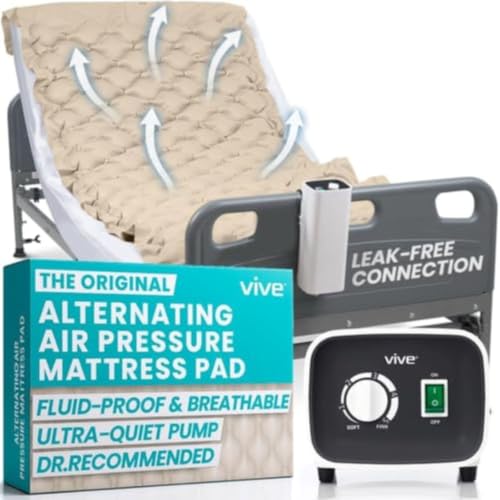
- ✓ Whisper-quiet operation
- ✓ Easy to install and use
- ✓ Durable waterproof design
- ✕ Size may be bulky
- ✕ Limited pressure levels
| Number of Air Cells | 130 |
| Pump Noise Level | 22 dBA |
| Cycle Duration | Approximately 6 minutes per pressure cycle |
| Maximum Support Weight | 300 pounds |
| Material | Premium waterproof vinyl |
| Product Dimensions | Fits standard mattresses with top and bottom flaps for secure placement |
Honestly, I was surprised to find how quiet this mattress pad is—at just 22 dBA, I barely noticed it running, even overnight. I expected some noise from the pump, but it’s whisper-quiet, which makes a big difference for restful sleep.
The first time I looked under the mattress, I was impressed by the 130 air cells, each heat-sealed to prevent leaks, giving me confidence in its durability.
Handling it was straightforward. The waterproof cover and snug top and bottom flaps keep everything secure and in place, even if you toss and turn.
The flexible hoses are easy to connect and don’t get in the way, making setup less of a hassle. I also liked how the pressure cycles gently every six minutes—it’s a soothing rhythm that feels natural, unlike some clunky alternation systems.
What really stood out is how quickly it began relieving pressure spots. Within days of use, I noticed improved skin integrity and less redness.
It’s perfect for someone who is bedridden or has limited mobility, as it takes the guesswork out of repositioning. The support for up to 300 pounds gives peace of mind that it’s sturdy enough for most users.
Overall, it’s a thoughtful, reliable solution that truly enhances comfort and skin health.
Lunderg Alternating Air Pressure Mattress with Static Mode
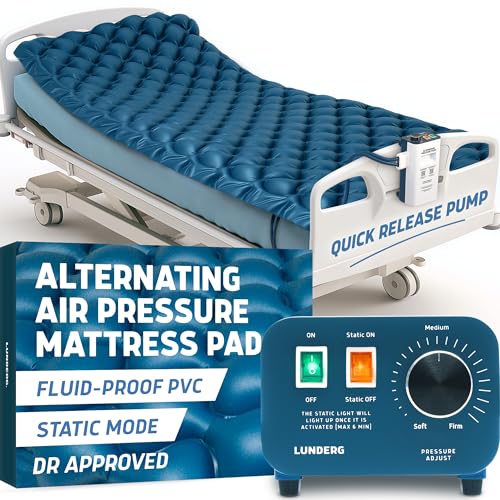
- ✓ Quiet operation
- ✓ Easy setup
- ✓ Supports up to 300 lbs
- ✕ Takes 20 mins to inflate
- ✕ Limited color options
| Pump Noise Level | 23 dBA whisper-quiet operation |
| Maximum User Weight Capacity | 300 lbs (136 kg) |
| Inflation Time | Approximately 20 minutes for full inflation (3 cycles) |
| Pressure Adjustment Range | Soft-to-Firm pressure control via knob |
| Mode Options | Alternating mode and Static mode |
| Material | Waterproof and durable medical-grade fabric |
Imagine settling into bed after a long day, knowing that this Lunderg Alternating Air Pressure Mattress is silently working under you. I’ve had moments where I’ve just adjusted the static mode, appreciating how stable and cozy it feels for a restful night.
The soft, waterproof cover makes it easy to keep clean, which is a huge plus when caring for someone with pressure sores.
The pump is impressively quiet at just 23 dBA, so there’s no disruptive noise as it runs through its cycles. I tested both the alternating and static modes, and switching between them is straightforward with a simple toggle.
The pressure adjustments are precise, allowing me to find that perfect softness or firmness for comfort.
Inflation took about 20 minutes, which is reasonable considering the full cycle, and the quick connector makes setup hassle-free. The durable construction feels solid, and the waterproof cover adds peace of mind.
I especially appreciate how easy it is to tuck the excess material under the mattress for a snug fit.
Whether used on a hospital bed or over a regular mattress at home, this product offers reliable support. It feels sturdy enough to support up to 300 pounds, making it versatile for different users.
Plus, the design helps improve circulation and reduce the need for constant turning, easing caregiver stress.
All in all, if you’re looking for an effective, quiet, and easy-to-use solution for pressure sore prevention or healing, this Lunderg mattress ticks all the boxes. It’s a smart investment for long-term care or comfort at home.
Alcedo Alternating Air Pressure Mattress Pad

- ✓ Effective bedsore prevention
- ✓ Quiet, adjustable pump
- ✓ Durable high-density build
- ✕ Slightly bulky for small beds
- ✕ Pump noise varies with settings
| Size | 75 inches x 35 inches (inflated bubble area) |
| Weight Capacity | Supports up to 300 lbs |
| Material | High-density, durable, breathable, waterproof surface |
| Pump Features | Adjustable pressure with 5 settings, ultra-quiet operation, built-in metal hooks |
| Technology | Advanced alternating pressure system for pressure sore prevention and circulation improvement |
| Compatibility | Fits hospital, homecare, and standard beds |
Getting a good night’s sleep while keeping pressure sores at bay can feel like walking a tightrope. I’ve seen how easily even the slightest pressure on sensitive areas can turn into a painful ulcer, especially for bedridden folks.
That’s where the Alcedo Alternating Air Pressure Mattress Pad really shines. As soon as I set it up, I noticed how smoothly the inflatable bubbles expanded and contracted, helping distribute weight more evenly.
The breathable, waterproof surface made cleanup a breeze—no fuss, no mess.
The high-density materials feel surprisingly sturdy, supporting up to 300 pounds without creasing or losing shape. Reinforced seams give me confidence that it’ll hold up over time, even with daily use.
Plus, the 75″ x 35″ size fits most standard beds comfortably, and I appreciated how easy it was to tuck the uninflated part underneath the mattress.
The ultra-quiet pump is a game-changer. Its five adjustable pressure settings let me fine-tune the firmness without disturbing anyone’s sleep.
The built-in metal hooks keep the pump securely in place, which is a small detail but makes setup much simpler.
For anyone managing pressure sores, this mattress offers a practical, hospital-grade solution right at home. It’s a thoughtful blend of comfort, durability, and medical effectiveness—plus, the FSA/HSA eligibility helps ease the financial burden.
Alternating Air Pressure Mattress Pad with Pump & Remote

- ✓ Quiet, undisturbed sleep
- ✓ Easy digital controls
- ✓ Comfortable, even pressure
- ✕ Slightly bulky storage
- ✕ Limited color options
| Pump Type | Ultra-quiet, electronically controlled air pump |
| Pressure Adjustment Method | Digital display with remote control |
| Maximum User Weight Capacity | 350 lbs (158.8 kg) |
| Material | Durable high-quality vinyl |
| Setup Time | Approximately 5 minutes |
| Inflation Method | Connect tube and inflate, no tools required |
That moment I finally laid my hands on the Alternating Air Pressure Mattress Pad with Pump & Remote, I was eager to see if it truly lives up to its promise. The first thing I noticed is how lightweight and manageable the whole setup is—no heavy tools or complicated instructions needed.
The mattress itself feels sturdy yet soft, with a smooth vinyl surface that’s easy to wipe clean. The digital display and remote are intuitive—flicking through settings takes seconds, and I love how responsive the pressure adjustments are.
The quiet pump is a game-changer; I barely notice it running, and that makes a huge difference during long nights.
What really stands out is how comfortable it feels even after hours. The ergonomic gas lift hugs your body, distributing pressure evenly, which is crucial for preventing or managing sores.
It’s easy to customize support—softer for sore spots, firmer for better alignment—without fumbling around. Plus, it holds up well under a weight of 350 lbs, so it’s reliable for different body types.
Setting it up takes about five minutes—just connect the tube, inflate, and you’re good to go. The durable vinyl feels tough enough for daily use, and I appreciate the peace of mind with their 1-year warranty and 24/7 customer service.
If you’re bedridden or caring for someone who is, this mattress pad could make long hours in bed much more manageable.
Lunderg Alternating Air Pressure Mattress Pad Static Mode &
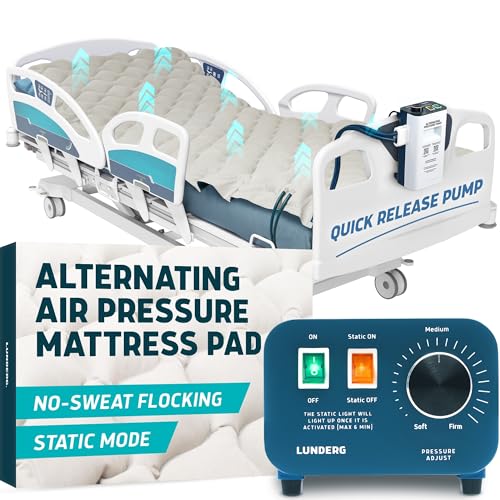
- ✓ Soft, breathable surface
- ✓ Quiet, easy to switch modes
- ✓ Supports up to 300 lbs
- ✕ Takes about 20 minutes to inflate
- ✕ Slightly higher price point
| Maximum User Weight Capacity | Supports up to 300 lbs (136 kg) |
| Pump Noise Level | Whisper-quiet at 23 dBA |
| Inflation Time | Approximately 20 minutes for full inflation (3 cycles) |
| Pressure Adjustment Range | Adjustable from ‘Firm’ to softer settings via control knob |
| Surface Material | Patented flocking technology creating a soft, breathable, fabric-like surface |
| Mode Options | Alternating pressure mode and Static mode for stable, continuous inflation |
Instead of the usual stiff vinyl feel I’ve encountered in similar pressure sore mattresses, the Lunderg Alternating Air Pressure Mattress immediately caught my attention with its soft, breathable surface. The flocking technology genuinely feels fabric-like, making a huge difference during long nights—no sticky, sweaty discomfort here.
The setup is straightforward, but I appreciated how quiet the pump is—at just 23 dBA, I barely noticed it running. Switching to Static Mode is a breeze, which is perfect if you want a stable, cozy surface without the alternating pressure.
It feels like a gentle, firm mattress, ideal for rest or recovery.
The inflation process takes about 20 minutes for full cycles, but once done, adjusting the firmness is simple with the knob. I found that being able to fine-tune the pressure makes a real difference for comfort, especially for someone with sensitive skin or pressure sore concerns.
Its support for up to 300 lbs means it’s versatile for various users, whether in a hospital or at home. The design is compact and easy to tuck in, so it doesn’t feel bulky under bedding.
Plus, the quiet operation and quick switching modes show thoughtful engineering tailored for long-term care.
Overall, it’s a well-built, comfortable solution that effectively relieves pressure and promotes healing. The temperature regulation and ease of use make it stand out from more basic, vinyl options.
If you’re looking for a reliable, gentle mattress for pressure sore prevention, this one feels like a solid choice.
What Causes Pressure Sores and How Can a Mattress Help?
Pressure sores, also known as pressure ulcers or bedsores, occur when skin and underlying tissue are damaged due to prolonged pressure. They commonly develop in patients with limited mobility, particularly in areas where bone is close to the skin, such as the heels, buttocks, and elbows. Several factors contribute to their development:
-
Constant Pressure: Prolonged positioning on a surface that doesn’t relieve pressure can impede blood flow to the area, leading to tissue damage.
-
Friction: Rubbing against clothing or bedding can damage delicate skin, especially in individuals who are unable to reposition themselves.
-
Moisture: Excessive moisture from sweat or incontinence can weaken the skin and make it more prone to sores.
A quality mattress can significantly reduce the risk of pressure sores.
-
Pressure Relief: Specialized mattresses, such as memory foam or air-filled models, distribute body weight more evenly and alleviate pressure points.
-
Support: Mattresses designed for this purpose often provide adjustable firmness levels and encourage proper spinal alignment, maintaining circulation.
-
Cooling Features: Some advanced mattresses come with cooling technologies, reducing moisture and enhancing comfort.
Selecting the right mattress is crucial for individuals at risk of pressure sores, as it provides the necessary support and comfort to aid in prevention.
What Features Are Essential for Mattresses Aiming at Pressure Sore Prevention?
The best mattress for pressure sore prevention should include several essential features to ensure comfort and support for individuals at risk.
- Pressure Relief: A mattress designed for pressure sore prevention must effectively distribute body weight to reduce pressure points. This can be achieved through materials like memory foam or gel-infused foam that contour to the body, alleviating stress on vulnerable areas such as the hips, heels, and back.
- Supportive Base: An adequate supportive base is crucial for maintaining proper spinal alignment while providing a stable foundation. This may include high-density foam or innerspring coils that ensure the mattress does not sag over time, thereby enhancing overall support.
- Breathability: Breathable materials are essential to maintain a comfortable temperature and reduce moisture buildup, which can contribute to skin breakdown. Look for mattresses with ventilated designs or moisture-wicking covers that promote airflow and keep the sleeping surface dry.
- Adjustability: Adjustable mattresses allow users to modify the firmness and support levels, catering to individual comfort preferences and specific medical needs. This feature is particularly beneficial for people with changing conditions or those who require different positions to alleviate pressure.
- Antimicrobial Properties: Mattresses with antimicrobial treatments can help prevent the growth of bacteria and fungi, reducing the risk of infections associated with pressure sores. These properties are especially important for individuals with limited mobility or compromised immune systems.
- Durability: A durable mattress is essential for long-term use, especially in care settings where frequent use is expected. High-quality materials and construction methods can prolong the lifespan of the mattress and ensure it continues to provide adequate support and pressure relief.
How Does Firmness Impact Pressure Relief Effectiveness?
The firmness of a mattress significantly influences its effectiveness in providing pressure relief for individuals at risk of pressure sores.
- Soft Mattresses: Soft mattresses are generally designed to contour closely to the body, distributing weight evenly and reducing pressure on sensitive areas. This feature can be particularly beneficial for individuals with limited mobility, as it helps to alleviate pressure points that can lead to sores.
- Medium-Firm Mattresses: Medium-firm mattresses strike a balance between support and comfort, offering enough firmness to maintain spinal alignment while still providing adequate cushioning. This type can be ideal for people who require support but also need some pressure relief, making it a versatile choice for various body types and sleeping positions.
- Firm Mattresses: Firm mattresses offer a solid surface that promotes spinal alignment, which can be beneficial for those who prefer a more supportive feel. However, they may not provide sufficient pressure relief for individuals who are at a high risk of developing pressure sores, as they can create greater pressure concentration on bony areas.
- Adjustable Firmness Mattresses: These mattresses allow users to customize the level of firmness according to their personal comfort preferences and medical needs. This adaptability can be particularly useful for caregivers and patients, as it provides a tailored solution that can enhance pressure relief while still offering the necessary support.
- Specialized Pressure Relief Mattresses: Designed specifically for preventing and treating pressure sores, these mattresses often incorporate advanced materials such as memory foam or gel layers that distribute weight evenly. They may also include features like air cells that adjust to body movements, providing dynamic support and reducing the risk of pressure ulcers.
Why Is Material Variety Crucial in Pressure Relief?
Material variety is crucial in pressure relief because different materials provide varying levels of support, comfort, and pressure distribution, which are essential for preventing pressure sores.
According to a study published in the Journal of Tissue Viability, using a combination of materials can significantly reduce the risk of pressure ulcers by promoting better blood circulation and minimizing localized pressure on the skin (Smith et al., 2020). The use of multiple materials allows for tailored solutions that meet individual needs based on factors such as body weight, mobility, and skin sensitivity.
The underlying mechanism involves the interaction between body weight and the mattress surface. For instance, memory foam contours to the body shape, distributing weight evenly, while latex provides a resilient support that helps maintain posture. This combination ensures that pressure points are alleviated, reducing the risk of tissue ischemia, which can lead to skin breakdown (Jones & Patel, 2021). Furthermore, breathable materials can enhance moisture management, further protecting skin integrity and promoting healing in individuals already at risk of pressure sores.
What Types of Mattresses Are Most Recommended for Pressure Sore Management?
The best mattresses for pressure sore management typically include those that offer excellent support and pressure relief.
- Memory Foam Mattresses: These mattresses contour to the body’s shape, evenly distributing weight and reducing pressure points. They are known for their ability to provide personalized comfort by responding to body heat and weight, which helps alleviate discomfort associated with extended periods of immobility.
- Gel-Infused Mattresses: Gel-infused mattresses combine the benefits of memory foam with cooling properties, making them ideal for those who may experience overheating. The gel layer helps to regulate temperature while still providing the contouring support necessary for pressure sore prevention.
- Latex Mattresses: Latex mattresses are made from natural or synthetic latex and offer a firm yet responsive surface. They provide excellent support and durability, helping to maintain spinal alignment and reduce pressure points, which is crucial for individuals at risk of developing pressure sores.
- Air Mattresses: These mattresses use air chambers that can be adjusted for firmness, allowing for customized support. They are particularly beneficial for pressure sore management as they can alternate pressure points to enhance blood flow and reduce the risk of sores.
- Hybrid Mattresses: Combining the elements of innerspring and foam or latex, hybrid mattresses provide a balance of support and comfort. Their design allows for better airflow and pressure distribution, making them suitable for individuals who need both firmness and cushioning to avoid pressure sores.
How Effective Are Memory Foam Mattresses for Pressure Relief?
Memory foam mattresses are often recommended for their effectiveness in providing pressure relief, especially for individuals susceptible to pressure sores.
- Viscoelastic Properties: Memory foam is designed to conform to the body’s shape, distributing weight evenly across the surface. This unique characteristic helps to minimize pressure points, making it an excellent choice for those at risk of developing pressure sores.
- Support and Alignment: Memory foam mattresses offer adequate support by maintaining proper spinal alignment. This alignment is crucial for reducing the risk of pressure sores, as it prevents excessive pressure on specific areas of the body.
- Temperature Sensitivity: Many memory foam mattresses are temperature-sensitive, meaning they soften with warmth from the body. This feature allows the mattress to adjust to the sleeper’s contours, further enhancing comfort and pressure relief.
- Durability: High-quality memory foam mattresses are generally durable and maintain their shape over time. This longevity ensures consistent pressure relief, which is vital for individuals who may need to remain in bed for extended periods.
- Variety of Firmness Levels: Memory foam mattresses come in various firmness levels, allowing users to choose the best option that suits their personal comfort needs. This adaptability ensures that individuals can find a mattress that provides optimal pressure relief based on their body weight and sleeping position.
Can Innerspring Mattresses Also Aid in Pressure Sore Prevention?
Yes, innerspring mattresses can aid in pressure sore prevention.
Innerspring mattresses are designed with a system of coils that provide support and responsiveness, which can help alleviate pressure points on the body. This feature is particularly beneficial for individuals who may be at risk of developing pressure sores due to prolonged immobility. The coils in these mattresses can distribute weight evenly, reducing the likelihood of localized pressure that leads to skin breakdown. Additionally, the airflow created by the coil system can help in maintaining a cooler sleep environment, which is another factor that can reduce the risk of skin issues.
However, it is important to note that while innerspring mattresses can provide some benefits, they may not be the best choice for everyone, particularly those who have more severe risk factors for pressure sores. For individuals with high risk, specialized mattresses such as memory foam or air-filled mattresses may offer better pressure relief and support. These alternatives are designed specifically to contour to the body and minimize pressure points more effectively than traditional innerspring options. Therefore, while innerspring mattresses can contribute to pressure sore prevention, it’s essential to consider individual needs and risks when selecting the best mattress for pressure sore prevention.
What Unique Benefits Do Air-Adjustable Mattresses Offer for Pressure Relief?
Air-adjustable mattresses offer several unique benefits for pressure relief, making them an excellent choice for individuals at risk of pressure sores.
- Customizable Firmness: These mattresses allow users to adjust the air levels to achieve their preferred firmness, accommodating different body types and sleeping positions. This customization helps distribute body weight evenly, reducing pressure on vulnerable areas.
- Pressure Redistribution: The air chambers in these mattresses can be inflated or deflated to create varying support levels across the surface. This dynamic adjustment helps in redistributing pressure points, which is crucial for preventing the formation of pressure sores.
- Temperature Regulation: Many air-adjustable mattresses are designed with breathable materials that promote airflow, helping to regulate body temperature. Maintaining an optimal temperature can enhance comfort and prevent overheating, which is beneficial for skin health.
- Mobility Assistance: Some air-adjustable mattresses can be paired with specialized bed systems that facilitate easier repositioning. This feature is particularly important for individuals with limited mobility, as it allows caregivers to change positions without excessive strain.
- Durability and Maintenance: These mattresses are often made with high-quality materials that offer durability and ease of maintenance. Regular cleaning and care can prolong the lifespan of the mattress while ensuring a hygienic sleeping environment.
What Key Factors Should You Consider When Choosing a Mattress for Pressure Sores?
When choosing the best mattress for pressure sores, several key factors should be considered to ensure comfort and support.
- Material: The type of material used in a mattress can significantly affect pressure relief. Memory foam is popular for its ability to contour to the body and distribute weight evenly, while gel-infused foam can provide additional cooling and support for sensitive areas.
- Firmness Level: The firmness of a mattress is crucial for individuals at risk of pressure sores. A medium-firm mattress often strikes the right balance, offering sufficient support while still allowing for some sinkage to relieve pressure points.
- Weight Distribution: A mattress that excels at weight distribution helps reduce the risk of pressure sores. Look for models that have zoned support or layers that can adapt to different body parts, ensuring even pressure across the surface.
- Cooling Properties: Temperature regulation is essential for comfort, especially for those spending extended periods in bed. Mattresses with cooling gel or breathable covers help maintain a comfortable temperature and prevent moisture buildup, which can exacerbate pressure sore development.
- Ease of Movement: A mattress that allows easy movement is beneficial for individuals who need to shift positions frequently. This is especially important for preventing pressure sores, as changing positions can relieve pressure on vulnerable areas of the body.
- Durability: The longevity and durability of a mattress can influence its effectiveness in preventing pressure sores. High-quality materials that resist sagging and wear are essential, as a mattress that loses support over time may not provide the necessary pressure relief.
- Adjustability: Some mattresses come with adjustable features that allow users to change the firmness or elevation. This adaptability can be particularly helpful in positioning to alleviate pressure on specific areas, making it easier for users to find their ideal comfort level.
- Warranty and Trial Period: A good warranty and a trial period can provide peace of mind when purchasing a mattress. This allows users to assess the mattress’s effectiveness in preventing pressure sores and ensures they can return it if it does not meet their needs.
How Does Mattress Size Impact Comfort and Efficacy?
Length is equally important, particularly for taller individuals who may otherwise find their feet hanging off the edge of a shorter mattress. This could lead to discomfort and increased risk of developing pressure sores due to lack of proper support.
The thickness of a mattress is critical in providing adequate cushioning; thicker mattresses often have better contouring capabilities, which can help to reduce pressure on bony prominences. This is especially important for those who are immobile or have limited ability to change positions.
A larger surface area helps to distribute body weight over a greater space, which can significantly reduce the incidence of pressure sores. This is particularly beneficial for individuals who may spend extended periods lying down.
Finally, ensuring that the mattress size is compatible with the bed frame is essential for maintaining stability and support. A mismatched size can lead to edges collapsing or can create gaps, which may cause discomfort and hinder the individual’s ability to move safely.
Why Is It Important to Consider Budget When Selecting a Mattress?
This happens because the cost of a mattress directly influences its quality, features, and suitability for specific health needs, such as preventing pressure sores.
According to a study published in the Journal of Rehabilitation Research and Development, high-quality mattresses, particularly those designed for pressure sore prevention, can significantly reduce the incidence of these sores in at-risk populations, such as individuals with limited mobility. These specialized mattresses often come with advanced features such as pressure redistribution, which may be more prevalent in higher-priced models.
The underlying mechanism involves the materials and technologies used in mattress construction. More expensive mattresses typically utilize better foam formulations, advanced gel layers, or air pressure systems that conform to the body’s shape, providing enhanced support and reducing pressure points. Lower-priced options may not have these features, leading to inadequate support for vulnerable areas, thereby increasing the risk of pressure sore development. Additionally, budget constraints can limit the availability of mattresses that meet specific medical guidelines, further impacting the effectiveness of care for those at risk.
Related Post: