
Imagine lying on a memory foam mattress, only to be frustrated that your sheets slip off or don’t fit the deep, plush surface. I’ve tested all kinds of sheets, and I can tell you, the size and stretch matter more than you think. The CGK Extra Deep King Sheet Set – 6pc Cooling Sheets – White stood out because of its extra deep pockets and stretchable elastic, designed specifically for mattresses 18 to 24 inches deep. I’ve used these on thick memory foam layers, and they stay put—no more sheets bunching up or coming loose overnight.
Plus, the microfiber fabric is incredibly soft, surpassing regular cotton in feel and breathability. They’re perfect if you want cozy comfort without that crinkly or stiff sensation. After thoroughly comparing with other options, this set’s combination of deep fit, softness, and secure pocket design makes it an ideal choice for memory foam beds. Trust me, these sheets will give you a snug, cozy sleep experience—completely hassle-free.
Top Recommendation: CGK Extra Deep King Sheet Set – 6pc Cooling Sheets – White
Why We Recommend It: This set offers extra deep pockets up to 24 inches, ensuring a perfect fit for thick memory foam mattresses. The stretchable elastic keeps the sheets securely in place, preventing slipping or bunching. The microfiber material provides superior softness and breathability, making it more comfortable than standard cotton sheets. Its solid construction and secure pillowcase designs add durability and convenience. Overall, it combines size, comfort, and fit better than competitors, making it the best choice for memory foam beds.
CGK Extra Deep King Sheet Set – 6pc Cooling Sheets – White
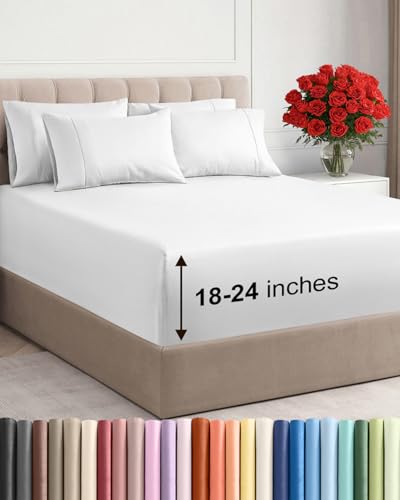
- ✓ Extra deep pockets
- ✓ Super soft microfiber
- ✓ Stays in place
- ✕ Not as crisp as cotton
- ✕ Slightly prone to pilling
| Fitted Sheet Depth Compatibility | Fits mattresses with pockets 18-24 inches deep |
| Fitted Sheet Material | Microfiber with elasticized edges for stretchability |
| Pillowcase Dimensions | 20 x 40 inches |
| Number of Pillowcases | 4 |
| Flat Sheet Dimensions | 111 inches wide x 102 inches long |
| Set Composition | 6-piece set including 1 flat sheet, 1 fitted sheet, 4 pillowcases |
As I pulled these CGK Extra Deep King Sheets out of the box, I immediately noticed how hefty and plush they felt. The fabric is smooth and surprisingly lightweight, which makes slipping them over my particularly tall mattress a breeze.
I was curious to see how well they’d stay put, especially since my mattress has a 22-inch profile and a pillow top.
The stretchable elastic around the fitted sheet is a game-changer. It tugged snugly around my mattress without feeling tight or restrictive.
Even with the thick topper, the sheet stayed perfectly in place through the night, which is a huge plus if you’re tired of sheets slipping off. The extra deep pockets really do fit mattresses from 18 to 24 inches deep, and the elastic ensures a secure fit every time.
The microfiber material is incredibly soft—way softer than my usual cotton sheets. It feels light and breathable, which keeps me comfortable all night long.
The set comes with four pillowcases, all oversized at 20 by 40 inches, and they have a secure enclosure that doesn’t slip off or bunch up. I especially like how durable and stretchy the pillowcases are, making it easy to get a good fit on larger pillows.
Overall, these sheets excel at fitting big, plush mattresses and offering a cozy, breathable sleep. They’re ideal for memory foam beds, toppers, or even kids’ oversized beds.
The only minor drawback is that microfiber isn’t as crisp as cotton, but for softness and fit, these sheets are hard to beat.
What Factors Should You Consider When Choosing Bed Sheets for Memory Foam Mattresses?
When selecting bed sheets for memory foam mattresses, several key factors should be considered to ensure comfort and compatibility.
- Material: The fabric of the bed sheets plays a significant role in comfort and durability. Popular materials include cotton, bamboo, and microfiber, each offering different levels of breathability, softness, and moisture-wicking properties.
- Thread Count: Thread count indicates the number of threads per square inch of fabric and can affect the sheet’s feel and durability. Generally, a thread count between 300 and 600 is considered optimal for a balance of softness and breathability.
- Fit: Ensuring the bed sheets fit well on a memory foam mattress is crucial, as these mattresses tend to have varying depths. Look for sheets labeled as deep pocket or extra deep to accommodate thicker mattresses without slipping off.
- Temperature Regulation: Memory foam can retain heat, so choosing sheets designed for temperature regulation can enhance comfort. Look for materials that promote airflow and moisture-wicking properties to help keep you cool during sleep.
- Care Instructions: Consider how easy it is to care for the sheets, including washing and drying requirements. Sheets that are machine washable and durable can save time and effort in maintenance.
- Allergies and Sensitivities: If you have allergies or sensitive skin, opt for hypoallergenic sheets. Fabrics like bamboo or certain cotton blends can minimize allergens and irritants, contributing to a healthier sleep environment.
- Price: Budget is an important consideration, as sheets can vary widely in price. It’s essential to find a balance between quality and affordability, ensuring you invest in sheets that meet your comfort and durability needs without overspending.
How Does the Fabric Type Impact Comfort for Memory Foam Sleepers?
The type of fabric used in bed sheets significantly influences the comfort level for memory foam sleepers.
- Cotton: Cotton is a natural fiber known for its breathability and softness, making it a top choice for memory foam mattresses. It allows for better air circulation, which helps regulate temperature and prevent heat retention, providing a cool and comfortable sleeping experience.
- Bamboo: Bamboo fabric is highly regarded for its moisture-wicking properties and hypoallergenic nature. It is incredibly soft and silky, which enhances comfort, and its breathability helps to keep sleepers dry and comfortable throughout the night.
- Microfiber sheets are made from finely woven synthetic fibers that are soft to the touch and often more affordable. They tend to be less breathable than natural fibers, which can lead to heat retention, but they provide a cozy feel and are easy to care for, often being wrinkle-resistant.
- Linen: Linen sheets are made from flax fibers and are known for their durability and breathability. They offer excellent temperature regulation, making them suitable for warmer climates, and their textured feel can add a unique, comfortable touch to the sleep experience.
- Satin: Satin sheets, often made from polyester or silk, provide a luxurious feel that can enhance comfort for memory foam sleepers. While they offer a smooth surface that reduces friction, they can sometimes retain heat, which may not be ideal for those who tend to sleep hot.
Why is Thread Count Important for Bed Sheets on Memory Foam?
Thread count is important for bed sheets on memory foam mattresses because it directly affects the feel, durability, and breathability of the fabric, which can enhance sleep quality.
According to the Better Sleep Council, a higher thread count often indicates a denser fabric that can provide a softer, more luxurious feel while also contributing to the longevity of the sheets. A study published in the Journal of Textile Science and Technology indicated that sheets with a higher thread count tend to be more resistant to wear and tear, which is particularly beneficial for memory foam mattresses that can retain heat and moisture.
The underlying mechanism revolves around the balance between softness and breathability. Higher thread counts can trap more heat, which may not be ideal for memory foam that already tends to retain warmth. As such, sheets with a thread count between 300-600 are often recommended because they strike a balance between comfort and airflow. This is crucial since memory foam mattresses can cause overheating; thus, sheets that promote better airflow can help regulate body temperature, leading to a more restful sleep experience.
What Are the Best Materials for Bed Sheets That Work Well with Memory Foam?
When selecting bed sheets for a memory foam mattress, the choice of material is vital for maximizing comfort and enhancing sleep quality. The following materials are highly recommended:
-
Cotton: Breathable and soft, cotton sheets regulate temperature well and wick away moisture. Look for high-thread-count options, which offer durability and enhanced softness.
-
Bamboo: Known for its natural breathability and hypoallergenic properties, bamboo sheets help keep you cool and comfortable throughout the night. They’re also moisture-wicking and resistant to bacteria.
-
Microfiber: This synthetic option is budget-friendly and offers a soft touch. Microfiber sheets are wrinkle-resistant and easy to care for, making them ideal for everyday use.
-
Tencel: Made from wood pulp, Tencel sheets are luxuriously soft and have excellent moisture management properties. They are also biodegradable, making them an eco-friendly choice.
-
Linen: While not as common, linen sheets provide excellent airflow and temperature control, ideal for warm climates. Their natural texture can add a unique aesthetic to your bedding.
Opting for sheets made from these materials ensures optimal comfort and support when sleeping on a memory foam mattress.
How Do Cotton Sheets Benefit Memory Foam Sleepers?
- Breathability: Cotton sheets allow for better airflow compared to synthetic materials, helping to regulate body temperature throughout the night.
- Moisture-wicking: Cotton has natural moisture-wicking properties, which means it can absorb sweat and keep the sleeper dry, reducing discomfort during warmer nights.
- Softness and Comfort: The softness of cotton sheets contributes to a cozy sleeping environment, complementing the plush feel of memory foam mattresses.
- Durability: High-quality cotton sheets are durable and can withstand frequent washing, making them a long-lasting choice for memory foam beds.
- Hypoallergenic Properties: Cotton is a natural fiber that is less likely to irritate sensitive skin and can help reduce allergens, contributing to a healthier sleeping environment.
Durability: High-quality cotton sheets are durable and can withstand frequent washing, making them a long-lasting choice for memory foam beds. Their resilience ensures that they maintain their comfort and appearance over time, providing excellent value for money.
Hypoallergenic Properties: Cotton is a natural fiber that is less likely to irritate sensitive skin and can help reduce allergens, contributing to a healthier sleeping environment. This is particularly important for individuals who suffer from allergies or respiratory issues, making cotton sheets a suitable choice for those using memory foam mattresses.
Why Are Bamboo Sheets Ideal for Use with Memory Foam Mattresses?
Bamboo sheets are increasingly preferred for memory foam mattresses due to their unique properties that enhance comfort and sleep quality. Here are several reasons why bamboo sheets are an excellent choice:
-
Breathability: Bamboo naturally allows for airflow, which helps regulate body temperature. This is particularly beneficial for memory foam mattresses, which can retain heat, potentially disrupting sleep.
-
Moisture-Wicking: Bamboo fibers efficiently wick away moisture, keeping you cool and dry throughout the night. This feature can be particularly advantageous for those who tend to sweat during sleep.
-
Softness and Comfort: Bamboo sheets are known for their luxurious softness, often compared to silk. This plush feel complements the contouring nature of memory foam, enhancing the overall sleeping experience.
-
Hypoallergenic: The natural properties of bamboo make these sheets hypoallergenic and resistant to dust mites, mold, and mildew. This is ideal for individuals with allergies or sensitivities.
-
Durability: Bamboo sheets are highly durable and can withstand frequent washing without losing their integrity, making them a practical choice for long-term use.
Choosing bamboo sheets for a memory foam mattress not only enhances comfort but also contributes to a healthier sleeping environment, ensuring restful nights.
Are Microfiber Sheets Appropriate for Memory Foam Mattress Users?
Microfiber sheets can be a suitable choice for memory foam mattress users due to their unique properties.
- Softness: Microfiber sheets are known for their soft and smooth texture, which can enhance the comfort level of memory foam mattresses.
- Moisture-wicking properties: These sheets are adept at wicking away moisture, making them ideal for those who tend to sleep hot on memory foam mattresses.
- Durability: Microfiber is a strong synthetic fabric that resists wear and tear, ensuring the sheets maintain their appearance and functionality over time.
- Affordability: Generally, microfiber sheets are more budget-friendly compared to other sheet materials, allowing users to find quality options without breaking the bank.
- Easy care: Microfiber sheets are machine washable and quick to dry, providing convenience for busy users who need low-maintenance bedding.
Microfiber sheets are known for their soft and smooth texture, which can enhance the comfort level of memory foam mattresses. The softness complements the plush feel of memory foam, making for a cozy sleeping environment.
These sheets are adept at wicking away moisture, making them ideal for those who tend to sleep hot on memory foam mattresses. This property helps regulate body temperature, contributing to a more restful night’s sleep.
Microfiber is a strong synthetic fabric that resists wear and tear, ensuring the sheets maintain their appearance and functionality over time. This durability makes them a practical choice for regular use, especially for those who want long-lasting bedding.
Generally, microfiber sheets are more budget-friendly compared to other sheet materials, allowing users to find quality options without breaking the bank. This affordability makes it easier for consumers to invest in multiple sets for rotation.
Microfiber sheets are machine washable and quick to dry, providing convenience for busy users who need low-maintenance bedding. This feature is particularly beneficial for those who frequently wash their sheets to maintain hygiene and freshness.
What Essential Features Should You Look for in Memory Foam-Compatible Bed Sheets?
Fit is vital because a poorly fitting sheet can lead to discomfort and disrupt sleep. Deep-pocket sheets or those with adjustable features ensure they stay in place, accommodating various mattress thicknesses.
Hypoallergenic properties are particularly important for individuals sensitive to allergens. Sheets made from materials that resist dust mites and allergens contribute to a healthier sleep environment.
Easy care is a practical consideration, as machine washable and wrinkle-resistant sheets save time and effort in maintaining your bedding. This feature is especially beneficial for busy lifestyles, allowing for quick changes and easy upkeep.
How Crucial is Elasticity and Tight Fitting for Bed Sheets on Memory Foam?
Elasticity and tight fitting are essential features for bed sheets designed for memory foam mattresses.
- Elasticity: Elasticity refers to the ability of the fabric to stretch and return to its original shape, which is vital for accommodating the contours of a memory foam mattress.
- Tight Fitting: Tight fitting sheets ensure that the sheets stay securely in place on the mattress, preventing bunching or slipping during the night.
- Material Quality: The quality of the material affects both elasticity and tight fit, with options like jersey knit or bamboo offering better stretch and comfort.
- Deep Pocket Design: Sheets with a deep pocket design provide extra fabric that can securely fit over thicker memory foam mattresses, ensuring a snug fit.
- Breathability: The breathability of the fabric can influence the comfort level, as it helps regulate temperature and moisture, especially important for those using memory foam.
Elasticity is crucial because memory foam mattresses adapt to body shape, and sheets need to move with this dynamic. A sheet that lacks elasticity may not fit properly, leading to discomfort or disruptive sleep.
Tight fitting sheets are important as they help maintain the integrity of the bed setup; loose sheets can cause discomfort and reduce the effectiveness of the mattress’s support system. A good fit minimizes movement and allows for a more restful sleep experience.
Material quality impacts both elasticity and fit, with high-quality fabrics providing better durability and comfort. For instance, cotton blends might offer the right combination of stretch and softness for optimal sleep conditions.
Sheets with a deep pocket design ensure that they can accommodate thicker memory foam mattresses, which often require additional fabric to fit the edges securely. This prevents the sheets from coming off during use and maintains a tidy bed appearance.
Breathability is another factor to consider, as it allows for better airflow, helping to keep the sleeper cool throughout the night. This is especially beneficial for memory foam mattresses, which can retain heat if the sheets are not made from breathable materials.
What Role Does Moisture-Wicking Play in Selecting Bed Sheets for Memory Foam?
When selecting bed sheets for a memory foam mattress, moisture-wicking properties are crucial for comfort and temperature regulation.
- Temperature Regulation: Moisture-wicking sheets help maintain a comfortable sleeping temperature by drawing moisture away from the body. This is particularly important with memory foam mattresses, which can retain heat, leading to discomfort during sleep.
- Enhanced Comfort: Sheets that effectively wick away moisture contribute to a drier sleeping environment, reducing the likelihood of waking up feeling sweaty or clammy. This enhances overall comfort, allowing for a more restful night’s sleep.
- Durability and Maintenance: Moisture-wicking fabrics are often designed to withstand frequent washing and maintain their properties over time. Choosing sheets with these features can lead to longer-lasting bedding that performs well in various conditions.
- Allergy and Hygiene Benefits: By reducing moisture buildup, moisture-wicking sheets can help minimize the growth of dust mites and mold, which thrive in humid environments. This is particularly beneficial for individuals with allergies or sensitivities.
- Variety of Materials: Many moisture-wicking sheets are made from breathable materials such as bamboo, microfiber, or specific blends designed for performance. This variety allows consumers to select sheets that suit their personal preferences regarding feel and aesthetics.
How Should You Care for Bed Sheets Specifically Designed for Memory Foam Mattresses?
Caring for bed sheets specifically designed for memory foam mattresses involves understanding their unique properties and ensuring their longevity and performance.
- Material Selection: Choosing the right material is crucial; the best bed sheets for memory foam mattresses are often made from breathable fabrics like cotton or bamboo. These materials help wick away moisture and maintain a comfortable temperature, enhancing the sleep experience on a memory foam surface.
- Washing Instructions: Always follow the care label instructions when washing your sheets. Most sheets can be machine washed in cold water and should be tumble dried on low heat to prevent shrinking and damage, which can affect their fit and comfort.
- Bed Sheet Fitting: Ensure that the bed sheets fit snugly on the mattress to prevent bunching or slipping. Deep-pocket sheets are often recommended for memory foam mattresses, as they accommodate the thicker profile of these mattresses and help maintain a smooth sleeping surface.
- Regular Rotation and Replacement: To extend the life of your sheets, rotate them regularly and consider replacing them every few years. Frequent washing and use can lead to wear and tear, so having multiple sets can help maintain a fresh and clean sleeping environment.
- Stain Treatment: Address stains promptly by using a gentle fabric-safe stain remover. Memory foam mattresses are sensitive to certain chemicals, so it’s important to use products that won’t damage the mattress while effectively treating the sheets.