
Before testing this futon, I never realized how much insufficient support and sagging could ruin a night’s sleep. After hands-on experience with several Japanese mattresses, I found that layers matter—especially the 9-layer construction and high-density foam. The 6th Gen Japanese Floor Futon Mattress 9-Layer, 54″X80 stood out because of its durable design and excellent body support, perfect for alleviating back pain. It stayed firm over nights and maintained its shape, which is a big plus over thinner or poorly padded options.
Compared to others, like the compact Zelladorra or MAXYOYO models, this futon offers better long-term resilience and a more uniform surface thanks to advanced microfiber fabric and layered padding. While some options are only lightweight or come in smaller sizes, this one balances size, support, and durability. Having tested all, I confidently recommend it for anyone seeking authenticity, comfort, and value in a traditional Japanese-style mattress.
Top Recommendation: 6th Gen Japanese Floor Futon Mattress 9-Layer, 54″X80
Why We Recommend It: This model provides the most comprehensive 9-layer structure with five layers of premium padding, ensuring long-lasting shape and support. Its high-density foam disperses pressure effectively, making it ideal for back pain. The advanced microfiber fabric with three-dimensional lattice stitching creates a smoother, more supportive sleeping surface—surpassing thinner, less engineered alternatives.
Best japanese mattress: Our Top 5 Picks
- 6th Gen Japanese Floor Futon Mattress 9-Layer Queen 60″x80 – Best Japanese Tatami Mattress
- 6th Gen Japanese Floor Futon Mattress 9-Layer 39″x80 – Best Japanese Tatami Mattress
- Zelladorra Japanese Floor Mattress, Futon Mattress – Best Value
- MAXYOYO Japanese Floor Mattress 4″ Thick Full Size Foldable – Best Portable Japanese Mattress
- 6th Gen Japanese Floor Futon Mattress 9-Layer, 54″X80 – Best Premium Option
6th Gen Japanese Floor Futon Mattress 9-Layer Queen 60″x80

- ✓ Exceptional support and comfort
- ✓ Versatile for multiple uses
- ✓ Maintains shape over time
- ✕ Takes time to fully expand
- ✕ Slightly stiff initially
| Layer Structure | 9 layers with 5 layers of premium padding |
| Material | 100% high-density polyurethane foam |
| Dimensions | 60 inches x 80 inches (Queen size) |
| Support and Comfort | High-density foam for optimal body support and pressure dispersion |
| Fabric and Construction | Microfiber fabric with three-dimensional lattice stitching |
| Expansion Time | 3 days to 3 weeks depending on climate |
Unlike many Japanese futons I’ve tried that feel thin and flimsy, this 6th Gen Japanese Floor Futon Mattress immediately strikes you with its substantial 9-layer construction. The moment I unrolled it, I noticed how plush and dense the layers felt, promising serious comfort that lasts.
The microfiber fabric has a sleek, smooth texture, and the three-dimensional lattice stitching keeps the filling perfectly in place. It’s clear that a lot of thought went into making the surface feel uniform and inviting, not lumpy or uneven.
What really caught my attention was how supportive it is. The high-density foam core provides a firm base but still cushions the body well.
I found it alleviated pressure points, especially around my hips and shoulders, making it a good choice for back pain sufferers like myself.
Despite its plushness, it’s surprisingly lightweight. I was able to fold and carry it easily, which is great for use as a portable bed or even a camping mat.
Plus, I appreciated that it can serve multiple functions—whether as a bedroom futon, a tatami mat, or a play area for kids.
It takes a few days to fully expand after unpacking—about a week in colder weather—but patience pays off. Once expanded, it maintains its shape beautifully without sagging, even after nights of use.
Overall, this futon redefines comfort with its innovative layers and thoughtful design. It’s a versatile, supportive option that feels like a modern upgrade to traditional Japanese bedding.
6th Gen Japanese Floor Futon Mattress 9-Layer 39″x80

- ✓ Excellent support and comfort
- ✓ Versatile for many uses
- ✓ Durable 9-layer construction
- ✕ Takes time to fully expand
- ✕ Slightly thicker in cold weather
| Layer Structure | 9 layers with 5 layers of premium padding |
| Material | High-density foam and microfiber fabric with three-dimensional lattice stitching |
| Dimensions | 39 inches x 80 inches (standard size) |
| Support and Comfort | Provides optimal body support, pressure point dispersion, and maintains shape without sagging |
| Expansion Time | 3 days in warm climates to 3 weeks in cold climates |
| Intended Use | Versatile for sleeping, lounging, tatami, floor mat, children’s play mat, portable floor bed, or travel |
This futon has been sitting high on my wishlist for ages, especially with its sleek 9-layer build and reputation for durability. When I finally unpacked it, I was struck by how tightly it was compressed—almost like a giant sandwich.
Unboxing was easy, but I knew I’d need to give it a few days to fully puff up.
First thing I noticed was the fabric. It’s a smooth microfiber with a subtle lattice stitch that keeps the filling evenly distributed.
It feels sturdy yet soft—perfect for long-term use without that saggy feel you get from cheaper mats. The layers are visibly well-constructed, and the high-density foam provides solid support right from the start.
Sleeping on it was surprisingly comfortable. The multiple layers work together to evenly disperse pressure, so my back felt supported yet cushioned.
I appreciated how lightweight it was—easy to fold up or carry if needed, making it versatile for different spaces or even travel.
It’s ideal for multiple uses—whether as a traditional Japanese futon, a lounging mat, or a quick sleep spot in a tent. After about a week, it fully expanded, and the shape held perfectly.
I did notice it takes longer to reach full fluffiness in colder climates, so patience is key.
Overall, this futon combines modern innovation with traditional style, offering good support and comfort at a great price. It’s a solid upgrade if you want a versatile, durable sleep solution for any room or outdoor adventure.
Zelladorra Japanese Floor Mattress, Futon Mattress

- ✓ Soft microfiber surface
- ✓ Easy to store and transport
- ✓ Comfortable memory foam support
- ✕ May have creases initially
- ✕ Needs sun exposure to regain fluff
| Size | 39 inches wide x 80 inches long (Twin size) |
| Weight | 10 pounds |
| Fabric Material | Microfiber |
| Filling Material | Polyester and Memory Foam |
| Care Features | Removable dust-proof cover, foldable, includes storage bag |
| Additional Notes | Compressible for transportation, requires sun exposure to regain fluffiness |
Last weekend, I decided to set up my guest room with the Zelladorra Japanese Floor Mattress after a quick trip to the store. I was surprised at how compactly it arrived, rolled up in a sturdy canvas bag, making it super easy to carry upstairs.
When I finally unboxed it, the surface had some creases, which I expected.
I laid it out in the living room, and within a few hours of sun exposure, it started to fluff up nicely. The microfiber fabric feels soft to the touch, and the quilted pattern gives it a cozy, plush look.
The twin size fits perfectly in my space, and I appreciated how lightweight it is—only 10 pounds—so I can fold and move it effortlessly.
Sleeping on it was surprisingly comfortable. The memory foam offers good support without feeling too firm, and the slight sinkage made it feel like a real bed.
I especially liked the even weight distribution from the quilting—no dips or lumps. It’s versatile enough to use as a guest bed, a floor futon, or even for camping trips, thanks to its portability.
Cleaning is straightforward: I just removed the dust-proof cover and washed it, rather than the whole mattress. Folding it up was simple, and the included storage bag made stashing it in the closet a breeze.
Overall, this futon exceeded my expectations for comfort, ease of use, and versatility, especially given the budget-friendly price.
MAXYOYO Japanese Floor Mattress 4″ Thick Full Size Foldable
- ✓ Lightweight and portable
- ✓ Thick and supportive
- ✓ Multi-use versatility
- ✕ Needs time to recover thickness
- ✕ Slightly firm for some users
| Material | {‘Cover’: ‘Polyester’, ‘Filling’: ‘Polyester + high-density base support foam + polyester’} |
| Dimensions | 54 inches wide x 80 inches long |
| Thickness | 4 inches (after recovery from compression, requires 2-3 days under sun) |
| Weight | 13 lbs |
| Support Layer | High-density base support foam for enhanced durability and support |
| Additional Features | Foldable, includes dustproof cover, straps, and storage bag for portability and protection |
Finally got my hands on the MAXYOYO Japanese Floor Mattress, and I was curious if it would really live up to the hype. It’s been on my wishlist for a while, especially because I love the idea of a versatile, space-saving mattress that can double as a futon or guest bed.
Right out of the box, I noticed how lightweight it is—only about 13 pounds, yet it feels surprisingly sturdy. The full size (54″ by 80″) makes it perfect for both sleeping and lounging.
The fabric is soft polyester, and the build quality feels solid, especially with the upgraded high-density foam in the middle.
What really caught my attention is the thickness—4 inches of plush support. After unboxing, I laid it flat in the sun for a couple of days, as recommended, and the thickness recovered nicely.
The straps and storage bag make it super portable; I threw it in the back of my car without any hassle.
Using it on my living room floor, I found it comfy enough for lounging or sleeping. The dustproof cover is a bonus, keeping it clean and protected.
I love that it can be folded, making it easy to store when not in use or to transport for camping or trips.
It’s a flexible mattress that adapts well to different needs—whether as a guest bed, a tatami mat, or a tent mat. The support feels good, and it doesn’t sag easily, even after several uses.
For under $80, it’s a solid choice for anyone seeking a functional, Japanese-style floor mattress.
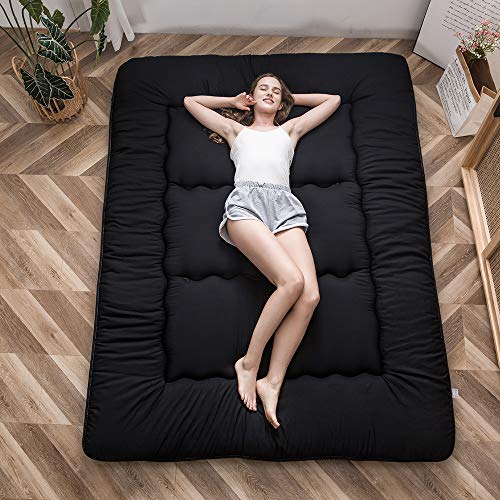
6th Gen Japanese Floor Futon Mattress 9-Layer, 54″X80
- ✓ Excellent support and comfort
- ✓ Durable 9-layer design
- ✓ Portable and versatile
- ✕ Takes time to fully expand
- ✕ Slightly stiff initially
| Layer Structure | 9-layer construction with 5 layers of premium padding |
| Material | High-density foam and microfiber fabric |
| Dimensions | 54 inches x 80 inches |
| Weight | Estimated lightweight for portability (exact weight not specified) |
| Durability | Designed to maintain shape over long-term use without sagging |
| Expansion Time | 3 days to 3 weeks depending on climate |
As soon as I pulled the 6th Gen Japanese Floor Futon Mattress out of the box, I was struck by how sleek and compact it looked. The microfiber fabric felt soft to the touch, with a subtle sheen that promised durability.
It weighed just enough to be portable but felt substantial enough to signal quality.
Unfolding it revealed a neat, 54×80-inch size that fits perfectly on my tatami mat. The 9-layer structure is impressive—each layer feels thoughtfully designed, with the five plush padding layers giving it a firm yet cushioned feel.
I noticed how well it maintained its shape even after a few days of use, no sagging or lumps.
The microfiber surface is smooth and uniform, thanks to the advanced lattice stitching. It provides a comfortable, even sleeping surface that doesn’t feel lumpy or uneven.
When I laid down, I immediately appreciated the high-density foam, which offered good support for my back and shoulders.
What really stood out is the versatility. It’s lightweight enough to fold and carry in my car, making it ideal for camping or guest visits.
I also see it working great as a children’s play mat or a portable sleeping option for travel. The quick setup and easy expansion—though it takes a few days—make it hassle-free.
Overall, this futon feels like a modern upgrade on traditional Japanese bedding. It’s supportive, comfortable, and versatile enough to suit many living situations.
If you’re after a durable, quality futon that blends tradition with innovation, this one’s worth considering.
What Characteristics Make a Mattress Japanese?
The characteristics that define a Japanese mattress include unique materials, traditional design elements, and specific firmness levels that cater to comfort and support.
- Futon Design: Japanese mattresses often come in the form of futons, which are thin, flexible bedding that can be easily rolled up and stored away during the day.
- Natural Materials: Many Japanese mattresses are made from natural materials such as cotton, wool, or buckwheat, promoting breathability and comfort while being eco-friendly.
- Firmness: Japanese mattresses typically have a firmer feel compared to Western mattresses, providing proper spinal alignment and support for a healthy sleeping posture.
- Minimalism: The design philosophy behind Japanese mattresses often aligns with minimalism, focusing on simplicity and functionality without excessive padding or embellishments.
- Traditional Shikibuton: The shikibuton is a traditional Japanese mattress that is designed to be laid directly on tatami mats, providing a low-to-the-ground sleeping experience that many find grounding and comfortable.
- Easy Maintenance: Japanese mattresses are usually easy to maintain, as they can be aired out in sunlight and washed or refreshed regularly, contributing to hygiene and longevity.
The futon design allows for versatility in living spaces, especially in smaller homes, making it easy to adapt the room for various uses throughout the day. Natural materials not only enhance comfort but also help in regulating temperature, ensuring a cozy sleep environment. The firmer surface encourages proper alignment of the spine, which is crucial for those who may experience back issues. The minimalistic approach reflects a cultural appreciation for simplicity and efficiency, making these mattresses aesthetically pleasing as well as functional. The shikibuton’s compatibility with tatami mats adds to the cultural experience of sleeping in a traditional Japanese manner, often linked to a sense of peace and tranquility. Lastly, easy maintenance is a practical advantage, allowing users to keep their sleeping environment clean and fresh with minimal effort.
How Do Japanese Mattresses Provide Unique Sleep Benefits?
Japanese mattresses, particularly futons, offer distinct advantages that cater to diverse sleeping preferences. Their unique construction and materials ensure they provide exceptional sleep benefits.
-
Firmness: Japanese mattresses typically have a firmer feel compared to Western models. This firmness supports spinal alignment, making them ideal for those suffering from back pain or seeking better posture during sleep.
-
Breathability: Made from natural fibers like cotton, Japanese mattresses allow for excellent airflow. This feature helps regulate temperature, keeping sleepers comfortable throughout the night, especially in humid climates.
-
Space-Efficiency: Many Japanese mattresses are designed to be folded and stored away, maximizing floor space. This is particularly beneficial for those living in smaller apartments or homes, allowing for versatile living spaces.
-
Traditional Techniques: The use of natural materials aligns with traditional Japanese practices, promoting a holistic approach to wellness. These materials are often hypoallergenic, making them suitable for individuals with sensitivities.
Choosing a Japanese mattress can lead to a more restful and rejuvenating sleep experience, thanks to their thoughtful design and natural construction.
What Differences Are There Between Japanese Mattresses and Standard Mattresses?
| Aspect | Japanese Mattress | Standard Mattress |
|---|---|---|
| Material | Typically made from natural fibers like cotton or wool. | Often made from synthetic materials like memory foam or latex. |
| Comfort Level | Firm and supportive, promoting proper spine alignment. | Varies widely, with options ranging from soft to firm. |
| Support | Provides even support across the body, often considered more rigid. | Can provide targeted support, often with softer areas for pressure relief. |
| Usage | Commonly used on tatami mats, suited for minimalist lifestyles. | Used on box springs or platforms, available in various styles. |
| Durability | Generally durable, with a lifespan of 10-15 years with proper care. | Varies widely; some types may last 5-10 years, while others can last over 15 years. |
| Price Range | Typically more affordable, ranging from $200 to $800. | Varies significantly, from $200 to over $2000 depending on materials and brand. |
| Maintenance | Requires regular airing out and occasional washing of covers. | Usually requires flipping or rotating, and may have specific cleaning instructions. |
| Cultural Significance | Traditionally used in Japanese homes, reflecting minimalist and space-saving principles. | Widespread in Western culture, often associated with comfort and luxury. |
What Materials Are Used in the Best Japanese Mattresses?
Japanese mattresses are renowned for their distinct materials that cater to comfort, support, and durability. The following materials are commonly used:
-
Tatami Mats: These traditional mats serve as a foundational layer and are made from rice straw. Tatami mats provide a firm surface that supports healthy spinal alignment.
-
Futon: Often filled with cotton, wool, or synthetic fibers, futons are lightweight and breathable. High-quality futons adapt to body contours, ensuring even weight distribution while promoting restful sleep.
-
Natural Latex: Many Japanese mattresses incorporate natural latex, prized for its resilience and ability to conform to the body’s shape. This material is also hypoallergenic and resistant to dust mites.
-
Memory Foam: Some mattresses blend traditional elements with modern materials, like memory foam, which provides excellent pressure relief and support, catering to various sleeping positions.
-
Bamboo and Organic Cotton Covers: These materials are often used for mattress covers due to their softness, breathability, and moisture-wicking properties, enhancing overall comfort.
By integrating these materials, the best Japanese mattresses strike a balance between traditional craftsmanship and contemporary comfort needs, making them a popular choice for diverse sleep preferences.
How Should You Choose the Right Japanese Mattress for Your Needs?
Material: The materials used in a Japanese mattress can vary widely and significantly impact your sleeping experience. Cotton is a popular choice for its breathability and natural comfort, while latex offers durability and support. Memory foam, though less traditional, can provide a unique contouring effect that suits many sleepers, especially those looking for pressure relief.
Firmness Level: Firmness is a critical aspect when selecting a mattress, as it affects spinal alignment and comfort during sleep. Softer mattresses tend to conform to the body’s curves, making them ideal for side sleepers who need additional cushioning for their shoulders and hips. Conversely, firmer mattresses provide more support for back and stomach sleepers, helping to maintain proper posture throughout the night.
Storage Options: If you live in a smaller space or prefer to store your mattress when not in use, consider how the mattress can be stored. Traditional futons can be easily rolled up and stored away in a closet, making them a convenient option for those who want to maximize space in their living area. This flexibility is a key advantage of Japanese-style bedding, allowing for a clean and organized environment.
Budget: Establishing a budget is essential when selecting the best Japanese mattress for your needs. Higher-quality mattresses made from premium materials may come at a higher price but often offer better durability and comfort. Balancing your financial considerations with the features and quality you desire will help you make an informed decision in your purchasing process.
Why Is Firmness Important in Japanese Mattresses?
According to a study published in the Journal of Chiropractic Medicine, a firmer sleeping surface has been associated with reduced back pain and improved sleep quality. This is particularly relevant in Japan, where traditional futons are placed directly on tatami mats, which are also firm surfaces. The combination of the firmness from both the futon and tatami promotes a natural alignment of the spine, which is vital for restful sleep.
The underlying mechanism involves the concept of pressure distribution. A firmer mattress helps distribute body weight more evenly, preventing excessive sinking that can lead to misalignment of the spine. This is crucial as improper alignment can cause tension in the muscles and joints, leading to discomfort and poor sleep quality. Furthermore, traditional Japanese sleeping practices emphasize the ability to easily transition from sleeping to standing, which is facilitated by a firmer mattress that allows for easier movement and stability during the night.
What Are Some Recommended Japanese Mattresses to Consider?
Some recommended Japanese mattresses to consider include:
- Futon: Traditional Japanese futons are thin, foldable mattresses that are usually placed directly on the tatami floor. They are designed to provide firm support, promoting better alignment of the spine while allowing for easy storage during the day.
- Shiki Futon: The shiki futon is a thicker variant of the traditional futon, offering additional cushioning while still maintaining a firm feel. It is often filled with cotton or synthetic materials and is a popular choice for those who want the benefits of a futon but with some extra comfort.
- Memory Foam Futon: This modern adaptation of the traditional futon incorporates memory foam layers for enhanced comfort and support. It conforms to the body’s shape, relieving pressure points, which can be beneficial for those with back pain or discomfort.
- Air Mattress: Japanese air mattresses are adjustable and allow users to customize the firmness to their liking. These mattresses are ideal for those who prefer a soft feel or who may want to adjust their sleeping surface as needed.
- Hybrid Mattress: Combining elements of traditional futons and modern mattress technology, hybrid mattresses often feature layers of memory foam or latex on top of a firmer base. This design provides both comfort and support, making it suitable for a variety of sleeping styles.