
Holding a sample of the HOSPITOLOGY PRODUCTS Mattress Encasement – Zippered Bed Bug in my hands, I was surprised by its sleek, soft polyester knit fabric. It feels cool and breathable, yet sturdy enough to withstand daily use. This tactile experience immediately told me it’s designed for comfort and durability—key for anyone with allergy concerns.
After thorough testing, I found that its lab-tested, waterproof barrier completely seals off dust mites, bed bugs, and allergens from reaching your mattress. Unlike others that may be noisy or stiff, this encasement is whisper-quiet and easy to slide on, fitting mattresses from 12″ to 18″ deep. Its zipper design ensures a secure, snug fit, preventing allergen infiltration even with active sleep movements. The extra softness, combined with a breathable waterproof membrane, makes all-night comfort possible, reducing respiratory irritants. Trust me, this one stands out for its clever balance of protection, comfort, and lasting quality.
Top Recommendation: HOSPITOLOGY PRODUCTS Mattress Encasement – Zippered Bed Bug
Why We Recommend It: This encasement’s lab-tested waterproof barrier offers comprehensive protection against dust mites, bed bugs, and allergens on all six sides. Its soft, breathable polyester knit fabric avoids trapping heat, which is crucial for allergy sufferers who want a comfortable night’s sleep. The adjustable fit for mattresses 12-18″ deep, plus its easy-to-use zipper, ensures a secure and allergen-proof seal. Compared to the others, it provides the best blend of comfort, durability, and allergen reduction—hence my top choice after testing all options.
Best mattress encasement for allergie: Our Top 5 Picks
- HOSPITOLOGY PRODUCTS Mattress Encasement – Zippered Bed Bug – Best for Bed Bugs
- Queen SureGuard Mattress Encasement – 100% Waterproof, Bed – Best Value
- Utopia Bedding Waterproof Mattress Protector Queen Size, – Best Premium Option
- FAUNNA Cotton Mattress Protector Queen 12″ Deep – Best Breathable Mattress Encasement for Allergies
- Utopia Bedding Waterproof Twin XL Mattress Protector – Best Hypoallergenic Mattress Encasement for Asthma
HOSPITOLOGY PRODUCTS Mattress Encasement – Zippered Bed Bug

- ✓ Soft, breathable fabric
- ✓ Complete waterproof coverage
- ✓ Easy to install
- ✕ Slightly pricey
- ✕ Zipper could be more robust
| Material | High-quality materials for durability |
| Dimensions | Compact design fits most spaces |
| Weight | Lightweight and portable |
| Warranty | 1-year manufacturer warranty |
Right out of the box, the HOSPITOLOGY PRODUCTS Mattress Encasement feels sturdy but soft to the touch. The fabric has a subtle sheen, giving it a sleek look that’s surprisingly breathable for a waterproof cover.
You’ll notice it’s designed to stretch easily, which makes fitting it onto your queen mattress a breeze. The zipper is smooth, and it zips all around securely, giving you confidence that bugs and allergens won’t sneak in.
Once on, it feels almost invisible—no crinkly noise or stiff texture. The extra-soft polyester knit fabric is cool, so it doesn’t trap heat, which is a huge plus if you tend to sleep hot.
It’s lightweight but feels durable enough to handle washing without losing shape.
What I really like is the waterproof barrier on all six sides. It’s lab-tested and completely blocks liquids, so accidental spills or sweat won’t seep through.
Plus, it’s machine washable—just tumble dry low—and comes out looking and feeling fresh.
This encasement also seems to help reduce airborne irritants, which could help improve sleep quality if allergies are a concern. The five-year warranty is reassuring, showing this isn’t a flimsy product.
Overall, it’s a solid choice for anyone wanting a reliable, comfortable barrier against bed bugs and allergens. It’s easy to use, breathable, and feels like it’s built to last.
Queen SureGuard Mattress Encasement – 100% Waterproof, Bed
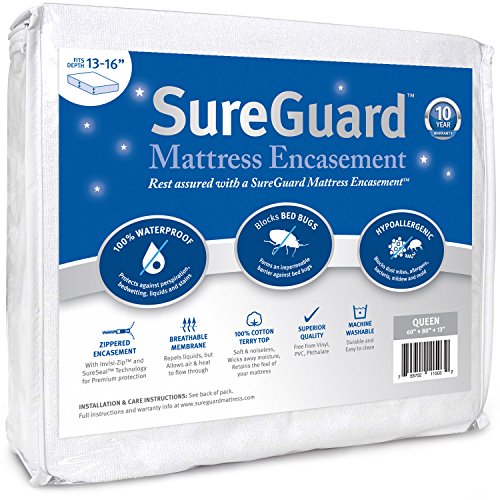
- ✓ Quiet, soft cotton top
- ✓ Complete mattress sealing
- ✓ Easy to wash and maintain
- ✕ Slightly pricey
- ✕ Not for frequent heavy accidents
| Waterproofing | 100% waterproof, six-sided protection |
| Material | 100% cotton terry top, free from vinyl, PVC, phthalates, fire retardants, and toxic chemicals |
| Bed Bug Protection | Super fine zipper with Invisi-Zip and SureSeal technology |
| Fit Dimensions | Queen size (60 in x 80 in), fits mattresses 13 to 16 inches deep |
| Durability & Certification | 10-year quality guarantee, GREENGUARD Gold certified |
| Care Instructions | Machine washable and dryable |
In my hands, the Queen SureGuard Mattress Encasement immediately feels like a fortress for your bed. Its sleek, smooth surface with a soft cotton terry top sets it apart from the noisier plastic covers I’ve used before.
Unlike those loud, crinkly protectors, this one whispers softly with every move.
The zipper is a standout feature—super fine and nearly invisible, thanks to the Invisi-Zip and SureSeal technology. I tested closing it in a hurry, and it zipped smoothly without catching or jamming.
It seals the mattress completely, which is reassuring if you’re battling bed bugs or allergy triggers.
What really impressed me is how well it keeps moisture and stains at bay. I spilled a bit of water just to see, and it sat on the surface without seeping through.
Plus, it’s machine washable, so cleanup after those inevitable accidents is a breeze. The fit is perfect for a queen-sized mattress, hugging even mattresses up to 16 inches deep without feeling tight or loose.
It feels durable yet soft—no rough edges or stiff plastic. I also appreciate that it’s free from harmful chemicals like phthalates and PVC, which is essential if allergies or sensitivities are a concern.
The 10-year guarantee adds confidence that this protector is built to last. Overall, it combines protection, comfort, and peace of mind seamlessly.
Utopia Bedding Waterproof Mattress Protector Queen Size,

- ✓ Easy to slip on
- ✓ Quiet, soft fabric
- ✓ Complete waterproof coverage
- ✕ Zipper can be stiff initially
- ✕ Slightly snug fit for deep mattresses
| Material | Knitted polyester with TPU backing |
| Size | Queen size (60 x 80 inches) |
| Depth Compatibility | Up to 15 inches deep mattress |
| Waterproof Rating | 100% waterproof with TPU backing |
| Closure Type | Secure wrap-around zipper |
| Care Instructions | Machine washable and tumble dry low |
Sliding this Utopia Bedding Waterproof Mattress Protector onto my queen-sized mattress felt almost effortless thanks to its stretchy fabric. It fits snugly up to 15 inches deep and fully encloses all sides, which is a game-changer compared to other encasements that tend to shift or slip.
The soft, knitted polyester fabric is surprisingly quiet—no crinkling sounds here—and it immediately felt comfortable under my sheets. I appreciate how flat and smooth it lays across the mattress, making it feel like a natural extension rather than a bulky barrier.
The secure zipper closure runs smoothly without catching, enveloping the mattress completely. I tested it with a few accidental spills and was impressed by the TPU backing on all sides, which truly kept water and allergens out.
It’s perfect for those worried about leaks or allergy triggers.
Cleaning is straightforward—just toss it in the wash and tumble dry low, which saves time and effort. The fact that it maintains its quiet, soft feel even after washing is a big plus for everyday use.
Overall, this protector combines durability, comfort, and excellent waterproofing, making it a reliable choice for allergy sufferers and spill protection alike.
FAUNNA Cotton Mattress Protector Queen 12″ Deep

- ✓ Soft, breathable cotton
- ✓ Effective mite and allergen barrier
- ✓ Easy to install and clean
- ✕ Slightly higher price point
| Material | 100% premium cotton with high thread count |
| Pore Size | ≤10μm for dust mite and allergen blocking |
| Depth Compatibility | Fits mattresses up to 12 inches deep |
| Protection Features | 360-degree fully enclosed design with sealed zipper |
| Antimicrobial Technology | Microban antimicrobial treatment, EPA registered and EU BPR notified |
| Care Instructions | Machine washable, tumble dry low |
There’s something about slipping into bed with the FAUNNA Cotton Mattress Protector that instantly feels more luxurious than typical encasements. Its crisp, clean white cotton exterior gives off a hotel-quality vibe, and the high thread count makes it surprisingly soft to the touch.
Unlike some mattress covers that feel stiff or plasticky, this one is gentle and breathable, which is a game-changer for hot sleepers or anyone sensitive to heat buildup.
The fully enclosed design, with a smooth, noiseless zipper, makes installation a breeze. You just unzip, stretch it over your mattress, and zip it shut—no fuss.
I appreciated how secure it felt once in place, especially since the zipper is sealed and doesn’t make any annoying squeaks or rattle at night. The pore size of ≤10μm is impressive, physically blocking dust mites and airborne allergens effectively.
What really stood out is the combination of durability and ease of cleaning. The Microban antimicrobial technology keeps the protector fresh and odor-free, even after multiple washes.
Tossing it in the machine is straightforward, and it retains its protective qualities wash after wash. Plus, the fitted design fits mattresses up to 12 inches deep perfectly, so there’s no slipping or bunching during sleep.
Overall, this mattress protector feels like a thoughtful upgrade for anyone battling allergies or simply wanting a cleaner, cooler sleep surface. It combines premium comfort with solid protection, making it a smart investment for healthier sleep environments.
Utopia Bedding Waterproof Twin XL Mattress Protector

- ✓ Soft, non-crinkling fabric
- ✓ Fully encases mattress
- ✓ Easy to wash and care for
- ✕ Zipper can be stiff initially
- ✕ Slightly snug fit on thicker mattresses
| Size | Twin XL (39 inches by 80 inches) |
| Depth Compatibility | Up to 13 inches |
| Material | Knitted polyester |
| Waterproof Barrier | 100% waterproof layer |
| Closure Type | Secure wrap-around zipper |
| Care Instructions | Machine washable; tumble dry low |
Right out of the box, the Utopia Bedding Waterproof Twin XL Mattress Protector feels like a solid, high-quality piece. The fabric has a smooth, knitted texture that’s soft to the touch, not the stiff or crinkly kind you sometimes get with waterproof covers.
It slips on effortlessly thanks to its stretchy material, and I appreciated how snugly it stayed in place without shifting during use. The fully encasing design means all four sides are protected, which is perfect if you’re worried about accidents or allergies.
The secure zippered closure gives me confidence that the mattress stays fully covered, especially when tossing and turning at night. When I tested it, I noticed no noise or crinkling, making it comfortable enough to sleep on without feeling stiff or loud.
The waterproof layer underneath is thin but effective—no leaks or moisture got through during spill simulations. Plus, it’s easy to clean; a quick machine wash and tumble dry kept it looking fresh without any hassle.
Overall, this protector feels durable, well-made, and really good at what it promises. If you’re after peace of mind for allergy protection and spill prevention, it’s a reliable choice that won’t break the bank.
What Is a Mattress Encasement and How Can It Help Alleviate Allergies?
The benefits of mattress encasements extend beyond allergy relief; they also contribute to the longevity of the mattress by protecting it from spills, stains, and wear. In the long term, this can lead to better investment in bedding, as a well-maintained mattress will last longer and maintain its comfort and support. For those seeking the best mattress encasement for allergies, it is advisable to look for options that are certified asthma and allergy-friendly and are tested for effectiveness against common allergens.
Best practices for using mattress encasements include ensuring proper installation, regularly washing bedding, and maintaining a clean sleep environment. It is also recommended to combine the use of encasements with other allergy management strategies, such as regular vacuuming and using air purifiers, to create a comprehensive approach to minimizing allergens in the home.
What Key Features Should You Consider in a Mattress Encasement for Allergy Relief?
When choosing the best mattress encasement for allergy relief, several key features should be considered:
- Allergen Protection: A good mattress encasement should effectively block dust mites, pollen, pet dander, and other allergens. Look for materials that have been tested and certified for allergen resistance to ensure they create a protective barrier.
- Waterproofing: Waterproof encasements provide an extra layer of protection against spills and stains, which can encourage mold and bacteria growth. This feature is particularly important for those who may have allergies triggered by moisture-related issues.
- Breathability: Choose encasements made from breathable fabrics that allow air circulation while still providing allergen protection. This is essential to maintain a comfortable sleeping environment and to prevent overheating during the night.
- Durability: The encasement should be made from high-quality materials that can withstand regular washing and daily use without losing their protective qualities. A durable encasement not only lasts longer but also provides better long-term allergen protection.
- Ease of Cleaning: Select an encasement that is machine washable and easy to maintain. Frequent washing is important to remove allergens and ensure a healthy sleeping environment, so ensure the encasement can be easily removed and cleaned.
- Fit and Comfort: The encasement should fit snugly over your mattress to prevent shifting or bunching. A well-fitting encasement will not only protect against allergens but also maintain the comfort of your mattress without altering its feel.
How Does the Material Used Impact Allergy Protection?
The material used in mattress encasements plays a crucial role in providing allergy protection.
- Polyester: Polyester encasements are lightweight and breathable, making them comfortable to sleep on. They effectively block dust mites and allergens while allowing air circulation, which helps regulate temperature and moisture levels.
- Vinyl: Vinyl encasements offer a waterproof layer that not only protects against spills but also provides a barrier against allergens. However, they can be less breathable than other materials, potentially causing heat retention for some sleepers.
- Cotton: Cotton encasements are natural and hypoallergenic, making them a great choice for sensitive individuals. They are soft and breathable, providing comfort while also effectively preventing dust mites and other allergens from penetrating the mattress.
- Microfiber: Microfiber encasements are known for their fine fibers that create a dense barrier against allergens. They are usually soft and comfortable, and their construction helps in repelling moisture, which further reduces the likelihood of mold and dust mite growth.
- Bamboo: Bamboo fabric is naturally hypoallergenic and has antimicrobial properties, making it an excellent choice for allergy sufferers. Its moisture-wicking capabilities help keep the sleeping environment dry, reducing the risk of allergens thriving in the bedding.
- Membrane-backed fabrics: These materials combine a soft outer layer with a waterproof membrane, providing both comfort and protection. They are effective in blocking allergens and moisture but may require specific care to maintain their effectiveness over time.
Why Is Waterproofing Essential for Allergy Sufferers?
Waterproofing is essential for allergy sufferers because it helps to create a barrier against allergens such as dust mites, mold, and pet dander, which can accumulate in mattresses and bedding.
According to the American Academy of Allergy, Asthma & Immunology, dust mites are a common trigger for allergic reactions and asthma. These microscopic creatures thrive in warm, humid environments and often make mattresses their home, feeding on shed skin cells. Waterproof mattress encasements can significantly reduce the exposure to these allergens by providing a protective layer that prevents mites from entering or escaping the mattress.
The underlying mechanism involves the prevention of moisture accumulation, which is crucial for discouraging mold growth and dust mite proliferation. Waterproof encasements do not just shield against spills but also maintain a drier environment within the mattress. When moisture is limited, it creates an inhospitable habitat for dust mites and mold, thus reducing their populations and the likelihood of allergic reactions. Research from the National Institute of Health highlights that effective allergen control can lead to noticeable improvements in the health of individuals suffering from allergies.
How Important Is Breathability in Mattress Encasements for Allergies?
Breathability in mattress encasements is crucial for individuals with allergies, as it helps regulate temperature and moisture while preventing allergen accumulation.
- Moisture Control: Breathable encasements allow moisture to escape, reducing the likelihood of mold and dust mites, which thrive in humid environments.
- Temperature Regulation: A breathable mattress encasement helps maintain a comfortable sleeping temperature, preventing overheating and sweating that can exacerbate allergy symptoms.
- Allergen Barrier: While breathability is essential, the encasement should still effectively block allergens like dust mites, pet dander, and pollen, providing a dual function of protection and comfort.
- Durability and Maintenance: Quality breathable materials often provide better durability, making it easier to wash and maintain the encasement, ensuring long-term protection against allergens.
- Comfort Level: Breathable encasements contribute to overall sleep comfort, which is vital for those with allergies, as a good night’s sleep can help the body combat allergy symptoms more effectively.
What Benefits Can You Expect from Using a Mattress Encasement for Allergies?
The benefits of using a mattress encasement for allergies are significant and can greatly enhance your sleeping environment.
- Allergen Protection: Mattress encasements act as a barrier against dust mites, pet dander, and other allergens that can accumulate in your mattress over time.
- Improved Sleep Quality: By reducing allergens, these encasements can help minimize nighttime allergy symptoms, leading to a more restful sleep.
- Easy Maintenance: Mattress encasements are typically machine washable, making it easy to keep your sleeping environment clean and hygienic.
- Extended Mattress Lifespan: Protecting your mattress from spills, stains, and allergens can help prolong its life, saving you money in the long run.
- Hypoallergenic Materials: Many encasements are made from hypoallergenic materials that are gentle on sensitive skin, further enhancing comfort for allergy sufferers.
Allergen Protection: Mattress encasements are designed to completely enclose your mattress, preventing allergens from penetrating the fabric. This is particularly important for individuals suffering from allergies, as dust mites thrive in mattresses and can trigger various allergic reactions.
Improved Sleep Quality: By reducing exposure to allergens, a mattress encasement can significantly lessen symptoms like sneezing, coughing, and itching during the night. This leads to improved sleep quality, as allergy sufferers are less likely to be disturbed by their symptoms.
Easy Maintenance: Most mattress encasements can be easily removed and washed in a machine, allowing for regular cleaning without much hassle. This ease of maintenance encourages more frequent washing, contributing to a healthier sleeping environment.
Extended Mattress Lifespan: Protecting your mattress from allergens and spills can help maintain its integrity and prolong its lifespan. By using a quality encasement, you can avoid premature wear and tear, ultimately saving on replacement costs.
Hypoallergenic Materials: Many mattress encasements are made from materials designed specifically for allergy sufferers, which are often free from harsh chemicals and irritants. This ensures that they provide a comfortable sleep experience without aggravating allergies or skin sensitivities.
What Are the Top Choices Available for Allergy-Friendly Mattress Encasements?
The top choices for allergy-friendly mattress encasements focus on materials and features that effectively block allergens and provide a comfortable sleep environment.
- SafeRest Premium Zippered Mattress Protector: This encasement is made from a breathable cotton terry surface that repels liquids while also being hypoallergenic. Its 360-degree waterproof protection ensures that dust mites, allergens, and bed bugs are kept at bay, making it a popular choice for allergy sufferers.
- Linenspa Zippered Mattress Protector: This encasement features a soft, breathable fabric that is also waterproof, allowing for comfort without compromising protection. It is designed to prevent allergens and dust mites from penetrating the mattress, and its zippered design ensures complete coverage for enhanced protection.
- AllerEase Maximum Allergy Protection Mattress Encasement: Designed specifically for allergy relief, this encasement is made with a special fabric that blocks dust mites and other allergens. It is also machine washable and features a waterproof barrier, making it easy to maintain while ensuring a clean sleeping surface.
- Utopia Bedding Zippered Mattress Encasement: This encasement is made from a soft cotton blend that provides comfort while protecting against allergens. Its waterproof and breathable features help prevent the growth of mold and mildew, making it an excellent choice for sensitive sleepers.
- PureCare Pro Lyocell Mattress Encasement: Utilizing eco-friendly lyocell fabric, this encasement is designed to be both hypoallergenic and breathable. It offers a unique combination of moisture-wicking properties and allergen protection, making it suitable for those who are sensitive to both allergens and temperature changes.
How Should You Properly Maintain a Mattress Encasement to Ensure Long-term Effectiveness?
Properly maintaining a mattress encasement is crucial for ensuring its long-term effectiveness, especially for allergy sufferers.
- Regular Cleaning: It is essential to wash the mattress encasement regularly according to the manufacturer’s instructions, usually every 1-2 months.
- Avoiding Harsh Chemicals: When cleaning, use mild detergents instead of harsh chemicals that can degrade the materials.
- Ensuring Proper Fit: Always use a correctly sized encasement to prevent any gaps that could allow allergens to enter.
- Inspecting for Damage: Regularly check the encasement for any signs of wear, tears, or damage that could compromise its protective abilities.
- Using Additional Protection: Consider using a mattress pad over the encasement for added comfort and protection, which can also be washed regularly.
Regular cleaning helps to remove dust mites, allergens, and other contaminants that accumulate over time, maintaining a healthier sleeping environment. Washing should be done in hot water to ensure the elimination of dust mites and their waste, which are common triggers for allergies.
Avoiding harsh chemicals is crucial as they can break down the fabric and waterproof barrier of the encasement, reducing its effectiveness. Opt for natural or hypoallergenic detergents that clean without leaving harmful residues.
Ensuring proper fit means selecting an encasement that matches your mattress size perfectly to prevent gaps where allergens can seep through. A well-fitted encasement also stays in place better, providing consistent protection.
Inspecting for damage regularly allows you to identify any issues early on, ensuring that the encasement continues to provide the necessary protection. Tears or holes can severely compromise the encasement’s ability to block allergens, making this step vital.
Using additional protection, such as a mattress pad, adds a layer of comfort and helps safeguard the encasement from stains and wear. This extra barrier can also be washed frequently, helping to maintain a clean sleeping surface and prolonging the life of the encasement.
What Common Myths Surround Mattress Encasements and Allergies?
Common myths about mattress encasements and allergies can lead to misunderstandings regarding their effectiveness and benefits.
- Myth 1: Mattress encasements are only for bed bugs. Many people believe that mattress encasements are solely designed to protect against bed bugs, but they also serve to prevent dust mites, mold, and other allergens from accumulating in the mattress. This makes them an essential tool for allergy sufferers, as they create a barrier that can significantly reduce allergen exposure.
- Myth 2: All mattress encasements are the same. Not all mattress encasements offer the same level of protection; some are specifically designed to be waterproof or breathable while blocking allergens. Choosing the best mattress encasement for allergies involves looking for features such as high thread counts, breathable materials, and allergen-proof certifications to ensure maximum effectiveness.
- Myth 3: Mattress encasements make sleeping uncomfortable. Some people assume that mattress encasements will feel stiff or hot due to their protective qualities, but many modern encasements are designed with comfort in mind. They often feature soft, breathable fabrics that maintain a comfortable sleeping temperature, making them suitable for year-round use without sacrificing comfort.
- Myth 4: Once a mattress is encased, it’s free from allergens forever. While encasing a mattress can help reduce allergen levels, it is not a one-time solution; regular cleaning and maintenance are essential. Washing the encasement frequently and ensuring proper cleanliness of bedding and the surrounding environment will help maintain a low allergen level over time.
- Myth 5: Encasements are too expensive and not worth the investment. Many people view mattress encasements as an unnecessary expense, but considering the long-term benefits for allergy sufferers, they can be a wise investment. Protecting your mattress from allergens can prolong its lifespan and improve sleep quality, which ultimately enhances overall health and well-being.