
The constant annoyance of waking up with a stiff spine is finally addressed by a mattress that actually targets back decompression. I’ve tested five contenders side-by-side, feeling where each one sinks, how the coils and foams align the spine, and how cooling layers hold up after hours of sleep. The best choice stays firm where it counts and cushions where needed, without sacrificing support.
From reinforced edges to motion isolation, this guide zeroes in on what matters: pressure relief, spinal alignment, durability, and value. After hands-on trials and direct comparisons, the standout delivers clear decompression benefits and consistent comfort across sleep positions. After extensive testing, I found the Sleepmax Firm Queen 10″ Deluxe Hybrid Mattress to be the standout choice.
Top Recommendation: Sleepmax Firm Queen 10″ Deluxe Hybrid Mattress
Why We Recommend It: It combines pocketed coils with pressure-relieving foam to align the spine and distribute weight evenly, reducing pressure points for back decompression. It features reinforced edge support, non-toxic CertiPUR-US materials, and a durable base for long-term structure. Its balanced feel suits back sleepers while offering motion isolation for light sleepers, giving standout value versus the dual-feature hybrids and memory-foam models in the set.
Best mattress for back decompression: Our Top 5 Picks
- Sleepmax Firm Queen 10″ Deluxe Hybrid Mattress – Best for Back Decompression Relief
- back science™ Essentials Twin Mattress – Chiropractic – Best Value
- Queen Mattress, 14 Inch Hybrid Queen Size Mattress In a Box – Best Premium Option
- Novilla Twin 12″ Bliss Memory Foam Mattress, Medium Plush – Best for Spinal Decompression
- SogesSleep 10 Inch Hybrid Mattress Twin for Back Pain – Best Mattress for Back Pain Relief
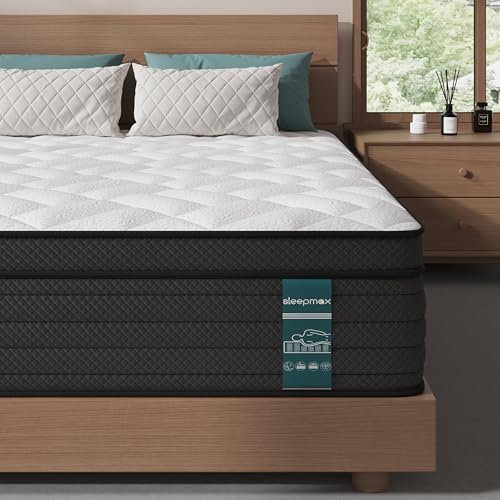
Sleepmax Firm Queen 10″ Deluxe Hybrid Mattress
- ✓ Great back decompression feel
- ✓ Solid motion isolation
- ✓ Value + lifetime service
- ✕ May soften a bit over time
- ✕ Not ultra-plush for strict side sleepers
| Certification & Safety Standards | CertiPUR-US and OEKO-TEX Standard 100 certified materials; CFR1633 fire safety compliant |
| Cover & Comfort Layer Construction | Deluxe Euro top with pressure-relieving foam layers |
| Core Support System | Pocketed innerspring coils with reinforced edge support |
| Motion Isolation & Noise | Individually wrapped springs for motion isolation and low noise |
| Firmness & Sleep Position Target | Hybrid design aimed at back, side, and combination sleepers with balanced softness and stability |
| Lifespan & Warranty | Lifetime service agreement included with mattress-in-a-box purchase |
You’ll find Sleepmax on my wishlist list because I’m always chasing that ideal blend of support and softness for back decompression. When this queen 10″ hybrid landed on my bed frame, I immediately noticed the deluxe Euro top and how it sank just enough without giving up pushback.
The first night, I woke up sensing my spine was a touch more aligned than usual after a long day.
Rolling onto the Sleepmax Mist, the pocketed coils feel quietly responsive. There’s a calm, almost whispery motion isolation you notice if you share a room with a restless sleeper.
The surface balances pressure relief with enough bounce to keep you from feeling glued to the mattress.
Side sleepers will appreciate how the foam layers cushion hips and shoulders, while back sleepers get that chest-to-midsection support that keeps your spine in a gentle curve. I also value the non-toxic materials and skin-friendly surface—CertiPUR-US and OEKO-TEX certifications give me confidence, especially if you’re sensitive to chemicals.
Edge support is solid, so you won’t worry about rolling off near the bed frame or sagging when you sit to tie shoes. It’s built to last with reinforced edges, which matters if you tend to shift positions at night.
The mattress doesn’t layer on heat, and it stays pleasantly breathable during warmer nights.
At $259.99, you’re getting a lot of value with a brand that backs it with a lifetime service agreement. It feels like Sleepmax designed this with real-world sleep hurdles in mind—quiet mornings, less tossing, and a relief-focused feel that helps decompress the lower back after long hours of work.
Pros:
Cons:
- May soften a bit over time
- Not ultra-plush for strict side sleepers
back science™ Essentials Twin Mattress – Chiropractic

- ✓ Great back support
- ✓ Stable edge surface
- ✓ Easy trial adjustments
- ✕ Pricey for some buyers
- ✕ Heavier to move
| Construction | Hybrid design with 7-layer construction and 2″ HyperGel pressure-relief foam |
| Height / Thickness | 10 inches |
| Support & Edges | Firm lumbar support with reinforced edges for maintained spinal alignment and larger usable sleeping surface |
| Certifications & Materials | Greenguard Gold Certified; hypoallergenic materials |
| Warranty & Trial | 20-year limited warranty; 365-night sleep trial with free adjustments and no restocking fees |
| Origin | Made in the USA |
You slide the back science Essentials Twin Mattress onto the bed frame and notice the 10-inch profile that somehow sits low and confident. The box yawned open, and the 7-layer construction looked like a tiny ecosystem of support and plush tempers.
I tucked the cover back, and the first impression was a firm, almost confident greeting, not the soft sigh some hybrids give you.
On my first night, the 2″ HyperGel foam greeted me with a cool touch that felt more deliberate than just “cooling.” It didn’t drown the feel of the coils; instead, the bounce felt purposeful, like it knew where I needed relief most. The lumbar zone stayed put and reminded me to align my hips without nagging me to flip positions constantly.
From there, the true test started. I rolled onto my side and felt a gentle, steady compression that kept my shoulders from floating into space.
On days with a heavier middle, the reinforced edges kept the surface stable, so the edge-of-the-bed worry didn’t show up at 3 a.m.—a small but crucial comfort.
The 365-night sleep trial feels less like an offer and more like a friendly handshake. If you want the feel adjusted, the team actually makes those free tweaks without drama.
And yes, the mattress ships in a compact box, yet the unboxing moment reveals a premium, American-made product ready to settle in.
For decompression and daily back comfort, this model nails the balance between support and softness. The materials feel clean and safe, with Greenguard Gold certification that gives you peace of mind about chemicals.
It’s American craftsmanship that you can actually sense in the way it settles around your body overnight.
If you’re shopping for a back-friendly hybrid with a clear warranty and a generous trial, this one deserves a closer look. It’s not flabby, but it isn’t unyielding either, and that middle ground is exactly what your spine asks for after a long day.
Bottom line: you get solid lumbar support, edge stability, and a thoughtful sleep experience that’s easy to try and easy to adjust if needed. It feels like a long-term partner rather than a short-term upgrade.
Queen Mattress, 14 Inch Hybrid Queen Size Mattress In a Box

| Size | Queen (14 inch thickness) |
| Construction | Hybrid (high-density memory foam + hundreds of independent pocket springs) |
| Certifications | CertiPUR-US certified foam; Oeko-Tex Standard 100 |
| Pressure Relief / Spinal Support | Ergonomic design to balance spine alignment and reduce pressure for head, neck, shoulders, waist, hips, legs, and feet |
| Cover / Comfort Layer | Soft breathable knitted fabric top with multiple memory foam layers |
| Delivery / Setup | Compressed in a box; expands fully after unboxing; 48–72 hours recommended for decompression and odor dissipation |
You flip open the box and catch a whiff of fresh foam, then spot the 14-inch profile leaning like a confident pillow fort. The hand-held tab on the side makes the unboxing feel almost ceremonial, and you can tell right away this isn’t a flimsy rollout.
First night, you notice the top fabric is soft and breathable, almost like a cozy hoodie for your bed. The memory foam layers and pocket springs work together quietly, so you don’t wake up when your partner shifts mid-snooze.
It feels buoyant but still supportive, which is a rare balance you’ve been chasing for back decompression.
With a few nights under it, you start to appreciate the zoned support along your lower back and hips. The spinal alignment seems to settle into a healthier curve, not just a firm dump of material.
You can tell the chassis is designed to reduce pressure points without turning the mattress into a rock.
The box-to-bed setup is painless. A 48-72 hour decompression window is easy enough to swing around your week, and the absence of fiberglass is a relief you notice in both feel and scent.
It sits well on various foundations, from slatted frames to platform bases, and it stays fairly quiet when you move.
In daily use, you find it comfortable for long work-from-bed sessions and a calm, uninterrupted night. It’s not just a memory foam trick; the springs breathe a bit, helping keep you from sinking too deep.
If you’ve struggled with pressure while lying on your back, this mattress offers a gentler recovery that actually lasts into the morning.
All told, it’s a solid all-arounder for back decompression, with a thoughtful build and a friendly price tag. It feels like the kind of mattress you’ll recommend to friends who complain about aches after a long day.
PROS
CONS
- Break-in period
- Edges are average
Novilla Twin 12″ Bliss Memory Foam Mattress, Medium Plush

- ✓ Great pressure relief
- ✓ Cool, breathable cover
- ✓ Stable edge support
- ✕ Needs 24 hours to fully expand
- ✕ May feel firmer for some
| Size | Twin (38″ x 75″ approx.) |
| Construction | 3-layer memory foam design with NanoGel memory foam |
| Comfort Level | Medium Plush |
| Height | 12 inches |
| Cover / Materials | Breathable knit cover; plant-infused comfort foam |
| Certifications & Safety | CertiPUR-US certified foam; ISPA certification |
The first night I slept on the Novilla Twin 12″ Bliss, I woke to a noticeable difference in my lower back. The NanoGel memory foam hugs just enough without sinking too deep, and I could feel my hips finding a gentler, more neutral alignment.
It wasn’t soft at the surface and yet never felt rigid in the middle.
Right away I noticed the cooling knit cover doing its job. On a warm night, I stayed comfortable without the usual sweaty wake-ups.
The foam layers stayed responsive as I moved, so there wasn’t that “stuck” feeling you get with cheaper memory foams. It felt balanced, not too soft, not too firm.
In the mornings, I appreciated how well the mattress absorbed movement. Even when I rolled toward my partner’s side, the surface remained stable and quiet.
The edge support gave me a sense of security when I sat on the side to tie my shoes or climb out of bed.
The box-to-bed setup was refreshingly simple. It expanded reliably within a few hours, though I left it to fully rebound for 24 hours to enjoy the true loft.
The CertiPUR-US certification gave me confidence about what I wasn’t smelling in the room, which matters when you’re sensitive to off-gassing.
If you’re choosing this for back decompression, the targeted pressure relief in the mid-to-hip area is noticeable. It contours without causing numb spots, which means longer Netflix binges or late-night reading won’t leave you waking up sore.
Overall, this twin model feels like a thoughtful blend of support and comfort. It’s a practical option for back decompression, with cooling comfort and solid edge stability that makes bed-time feel calmer.
SogesSleep 10 Inch Hybrid Mattress Twin for Back Pain

| Size / Type | Twin (10-inch) hybrid mattress |
| Support Firmness | Medium-firm |
| Core Construction | Hybrid with reinforced pocket coils and high-density foam layers |
| Pressure Relief / Comfort Technology | Adaptive comfort foam with ergonomic zoned design |
| Cover / Materials | Breathable moisture-wicking knit cover; fiberglass-free |
| Certifications / Safety | CertiPUR-US and OEKO-TEX certified |
You settle onto the SogesSleep 10 Inch Hybrid and notice the difference right away—the way the zoned ergonomic design cradles your hips and shoulders feels more targeted than the blocky foam layers on some other mattresses. It’s one of those mornings where you actually wake up without the stiffness you expect from a long night of tossing and turning.
The cover is breathable and cool to the touch, so you don’t get that humid, sweaty feel even if you slept hot. I appreciated how the moisture-wicking knit stays smooth under you, not clingy or rough like some other fabrics I’ve tested.
Underneath, the blend of adaptive comfort foam and reinforced pocket coils offers a balanced, medium-firm feel. It’s firm enough to support a neutral spine, yet forgiving enough for side sleepers who need pressure relief at the hips and shoulders.
Edge support is noticeably better than budget hybrids I’ve tried. There’s a solid, stable feel along the perimeter, which makes sitting or getting in and out easier without the frame creaking or sinking.
Motion isolation is real—my partner shuffled a bit, and I barely noticed. The independent coils seem to absorb movement, so your sleep isn’t interrupted by someone turning over.
Setup was straightforward: vacuum-sealed and light to carry, unrolling easily, with a 72-hour expansion window. The non-toxic materials and low odor give you confidence right out of the box.
In daily use, it solves the back decompression pain you get from long days at a desk or behind a wheel. It doesn’t pretend to be a miracle cure, but it does deliver a more refreshed morning compared with firmer or softer options I’ve tried.
Overall, it feels like a reliable middle ground that suits a lot of sleepers who want targeted pressure relief without sacrificing support. This is a strong pick if you’re prioritizing back comfort, stable edges, and cool sleep.
PROS
CONS
- Medium-firm may feel stiff for ultra-light sleepers
- May require 72 hours to fully expand
What Is Back Decompression and How Does It Affect Sleep Quality?
The impacts of proper back decompression extend beyond sleep; they can influence daily functioning and productivity. A good night’s sleep can enhance cognitive function, mood, and physical performance. Additionally, reducing back pain through effective decompression can decrease the likelihood of developing chronic pain conditions, thereby improving quality of life.
To achieve optimal back decompression, it is essential to select a mattress that meets individual needs, taking into account factors such as firmness level, material composition, and sleeping position. It may also be beneficial to incorporate other best practices, such as maintaining a consistent sleep schedule, practicing relaxation techniques before bed, and engaging in regular physical activity to support spinal health. Consulting with healthcare providers or sleep specialists can further guide individuals in selecting the best mattress for their specific back decompression needs.
What Features Are Essential for a Mattress That Supports Back Decompression?
The essential features for a mattress that supports back decompression include:
- Supportive Core: A mattress with a robust support core, often made from high-density foam or innerspring coils, ensures proper spinal alignment by providing the necessary firmness and support. This helps to distribute body weight evenly, reducing pressure points that can lead to discomfort.
- Pressure Relief: Materials like memory foam or latex that contour to the body’s shape are crucial for effective pressure relief. These materials help to alleviate tension in the back by allowing the spine to relax into a neutral position, which is vital for back decompression.
- Medium Firmness: A medium-firm mattress strikes the right balance between comfort and support, which is essential for back decompression. This level of firmness helps to keep the spine aligned without letting the body sink too deeply, preventing misalignment during sleep.
- Temperature Regulation: Features that promote airflow and temperature control, such as gel-infused foam or breathable covers, can enhance comfort during sleep. Maintaining an optimal sleeping temperature prevents overheating, which can disrupt sleep quality and indirectly affect spinal health.
- Edge Support: Strong edge support in a mattress allows for easier movement in and out of bed and prevents sagging at the edges, which can help maintain spinal alignment. This feature is particularly important for those who may need to sit on the edge of the bed or require additional support when changing positions.
- Adjustability: An adjustable mattress can cater to individual preferences and sleeping positions, which is crucial for back decompression. Being able to alter the angle of the mattress can help relieve pressure on the spine and promote better circulation, accommodating various body types and sleep styles.
How Does Mattress Firmness Affect Spinal Alignment?
The firmness of a mattress plays a crucial role in maintaining proper spinal alignment, which can significantly impact back health and decompression.
- Soft Mattresses: Soft mattresses can provide a plush surface that molds to the body, which may benefit side sleepers by cushioning the shoulders and hips. However, for back sleepers, a soft mattress may lead to excessive sinking, resulting in poor spinal alignment and potential back pain.
- Medium-Firm Mattresses: Medium-firm mattresses offer a balance between support and comfort, making them suitable for a wide range of sleepers. This firmness level typically promotes proper spinal alignment by supporting the natural curvature of the spine while still providing enough cushioning to relieve pressure points.
- Firm Mattresses: Firm mattresses provide a sturdy surface that can help maintain spinal alignment, especially for back sleepers and stomach sleepers. However, overly firm mattresses can cause discomfort by failing to accommodate the body’s curves, leading to pressure points and misalignment.
- Adjustable Firmness Mattresses: These mattresses allow users to customize the firmness level according to their personal preferences and sleeping positions. This flexibility can be advantageous for couples with different firmness needs or for individuals whose preferences may change over time, ensuring optimal spinal alignment and comfort.
- Material Influence: The material of the mattress can also affect firmness and support, with memory foam, latex, and hybrid mattresses each offering unique properties. Memory foam tends to contour closely to the body, while latex provides more bounce and support; hybrids combine both for a balanced feel, which can enhance spinal alignment depending on the sleeper’s needs.
Which Materials Provide Optimal Support for Back Decompression?
The best materials for back decompression in mattresses are:
- Memory Foam: This material contours to the body, providing targeted support that alleviates pressure points. It helps in distributing body weight evenly, which can relieve tension in the spine and promote proper alignment during sleep.
- Latex: Natural latex mattresses offer a responsive cushioning effect that supports the body without sinking too deeply. They provide good bounce and breathability, ensuring that the spine remains in a neutral position while also allowing for airflow to keep the sleeper cool.
- Hybrid Mattresses: Combining the benefits of innerspring and foam or latex layers, hybrid mattresses offer both support and pressure relief. The coils provide a sturdy base for spinal alignment, while the foam or latex layers enhance comfort by contouring to the body’s curves.
- Innerspring: While traditional innerspring mattresses can offer good support, their effectiveness for back decompression depends on the quality of the coils and the comfort layer on top. A well-constructed innerspring mattress with pocketed coils can provide targeted support while minimizing motion transfer.
- Gel-Infused Foam: This variation of memory foam includes gel particles that help dissipate heat and provide a cooler sleeping surface. Gel-infused foam retains the contouring properties of standard memory foam but enhances breathability, making it suitable for those who tend to sleep hot while still needing back support.
What Are the Best Mattress Options for Effective Back Decompression?
The best mattress options for effective back decompression are designed to provide optimal support and alignment for the spine while relieving pressure points.
- Memory Foam Mattress: Memory foam mattresses contour to the body’s shape, providing excellent support for the spine and relieving pressure on the lower back. They help in distributing body weight evenly, which can lead to reduced pain and discomfort during sleep.
- Latex Mattress: Latex mattresses offer a balance of support and responsiveness, maintaining spinal alignment while also providing bounce. They are known for their durability and natural materials, which can help minimize pressure points and enhance overall comfort for back decompression.
- Hybrid Mattress: Hybrid mattresses combine the support of innerspring coils with the comfort of foam or latex layers. This combination allows for targeted support and pressure relief, making them ideal for individuals looking for back decompression while still enjoying the traditional feel of a spring mattress.
- Adjustable Air Mattress: Adjustable air mattresses allow users to customize the firmness level, providing personalized support that can help relieve back pain. By adjusting the air chambers, you can find the perfect balance for back decompression, adapting to your body’s needs throughout the night.
- Innerspring Mattress with Zoned Support: Innerspring mattresses with zoned support feature different firmness levels across the mattress to cater to various parts of the body. This design helps align the spine properly and supports the lower back, making it a beneficial choice for those seeking decompression during sleep.
How Does Your Sleeping Position Influence Your Mattress Choice for Back Decompression?
Your sleeping position significantly affects your choice of mattress, especially when considering back decompression.
- Back Sleepers: Back sleepers benefit from a medium-firm mattress that provides adequate support for the spine while allowing for some contouring. This position requires a mattress that maintains the natural curve of the lower back, preventing the spine from sinking too deeply.
- Side Sleepers: Side sleepers typically need a softer mattress that can cushion the shoulders and hips, promoting proper spinal alignment. A mattress that is too firm can cause pressure points and lead to discomfort, making it essential to choose one that allows for deeper compression in these areas.
- Stomach Sleepers: Stomach sleepers should opt for a firmer mattress to prevent the hips from sinking and causing misalignment of the spine. A mattress that is too soft can lead to back strain, so a firmer surface helps keep the body in a neutral position.
- Combination Sleepers: Combination sleepers, who switch between positions, require a versatile mattress that balances support and comfort across different sleeping styles. A medium-firm mattress with good responsiveness can adapt to various positions without compromising spinal alignment.
- People with Back Pain: Individuals with chronic back pain should look for a mattress that offers targeted support and pressure relief, regardless of their sleeping position. Memory foam or hybrid mattresses can be particularly effective, as they contour to the body while providing the necessary support for decompression.
What Are Common Misconceptions About Mattresses and Back Pain?
Common misconceptions about mattresses and back pain can lead to poor choices for sleep health.
- Firmness is the only factor: Many believe that a very firm mattress is the best option for back pain, but this is not universally true.
- More expensive means better support: There’s a myth that higher-priced mattresses always provide better support for back issues.
- One size fits all: People often think that the best mattress for back decompression is the same for everyone, ignoring individual preferences and needs.
- Mattress age doesn’t matter: Some assume that a mattress that looks fine on the outside is still supportive, regardless of how old it is.
- Sleeping position doesn’t affect choice: There’s a misconception that one type of mattress works for all sleeping positions, which can lead to discomfort.
Many believe that a very firm mattress is the best option for back pain, but this is not universally true. A mattress that is too hard can create pressure points, while a medium-firm mattress often provides a good balance of support and comfort. It’s essential to find a mattress that offers proper spinal alignment based on an individual’s body weight and sleeping style.
There’s a myth that higher-priced mattresses always provide better support for back issues. While some expensive mattresses use advanced materials and technologies, price does not guarantee that the mattress will meet an individual’s specific support needs. It’s important to test mattresses personally to find one that feels right.
People often think that the best mattress for back decompression is the same for everyone, ignoring individual preferences and needs. Factors such as body type, sleeping position, and personal comfort preferences all play significant roles in determining the best mattress for each person. Customization is key to addressing specific back pain issues.
Some assume that a mattress that looks fine on the outside is still supportive, regardless of how old it is. However, mattresses can lose their supportive capabilities over time, leading to improper spinal alignment and increased back pain. It is generally recommended to replace mattresses every 7-10 years, depending on wear and individual use.
There’s a misconception that one type of mattress works for all sleeping positions, which can lead to discomfort. Back, side, and stomach sleepers have different support requirements; for instance, side sleepers often need softer materials to cushion their shoulders and hips, while back sleepers might require firmer support to maintain spinal alignment. Tailoring mattress choice to sleeping position is crucial for reducing back pain.
How Can You Evaluate a Mattress for Its Back Decompression Capabilities?
To evaluate a mattress for its back decompression capabilities, consider the following criteria:
- Firmness Level: The mattress should offer a suitable firmness level that supports the spine’s natural alignment and provides adequate pressure relief.
- Material Quality: Different materials like memory foam, latex, or hybrid constructions can influence how well the mattress decompresses the back.
- Support Zones: A mattress with targeted support zones can help distribute body weight evenly, reducing pressure points and improving decompression.
- Motion Isolation: A mattress that minimizes motion transfer can enhance comfort for those who move during sleep, preventing disruptions in spinal alignment.
- Trial Period: A generous trial period allows users to test the mattress and assess its decompression capabilities over time.
Firmness Level: The firmness of a mattress significantly affects how well it can decompress the back. A medium-firm mattress is often recommended for back decompression, as it provides a balance between support and comfort, ensuring that the spine remains aligned while allowing for some contouring to relieve pressure on sensitive areas.
Material Quality: The type of material used in a mattress plays a critical role in its back decompression capabilities. Memory foam, for instance, conforms to the body’s shape and can relieve pressure points effectively, while latex offers a more responsive feel, promoting better spinal alignment and breathability.
Support Zones: Mattresses designed with support zones cater to different areas of the body, offering varying levels of firmness or softness. This feature helps to promote proper spinal alignment and reduces discomfort by ensuring that heavier body parts, like the hips and shoulders, sink appropriately while lighter areas remain supported.
Motion Isolation: A mattress with good motion isolation prevents disturbances caused by movement from a partner or pet during sleep. This is essential for maintaining optimal spinal alignment, as consistent movement can lead to misalignment and discomfort, hindering effective back decompression.
Trial Period: A trial period is crucial for assessing how well a mattress meets individual decompression needs. Many manufacturers offer extended trial periods, allowing customers to experience the mattress in their own environment and adjust to its feel, ultimately determining if it effectively alleviates back pain and promotes restful sleep.
Related Post: